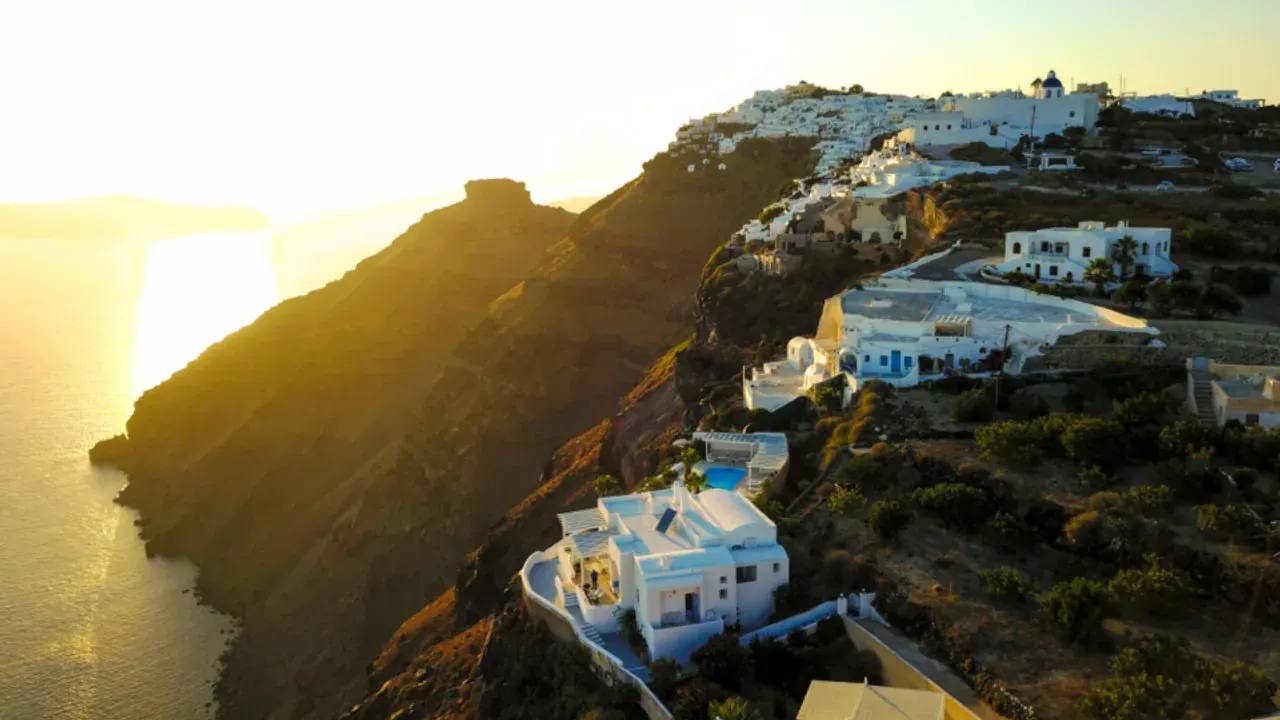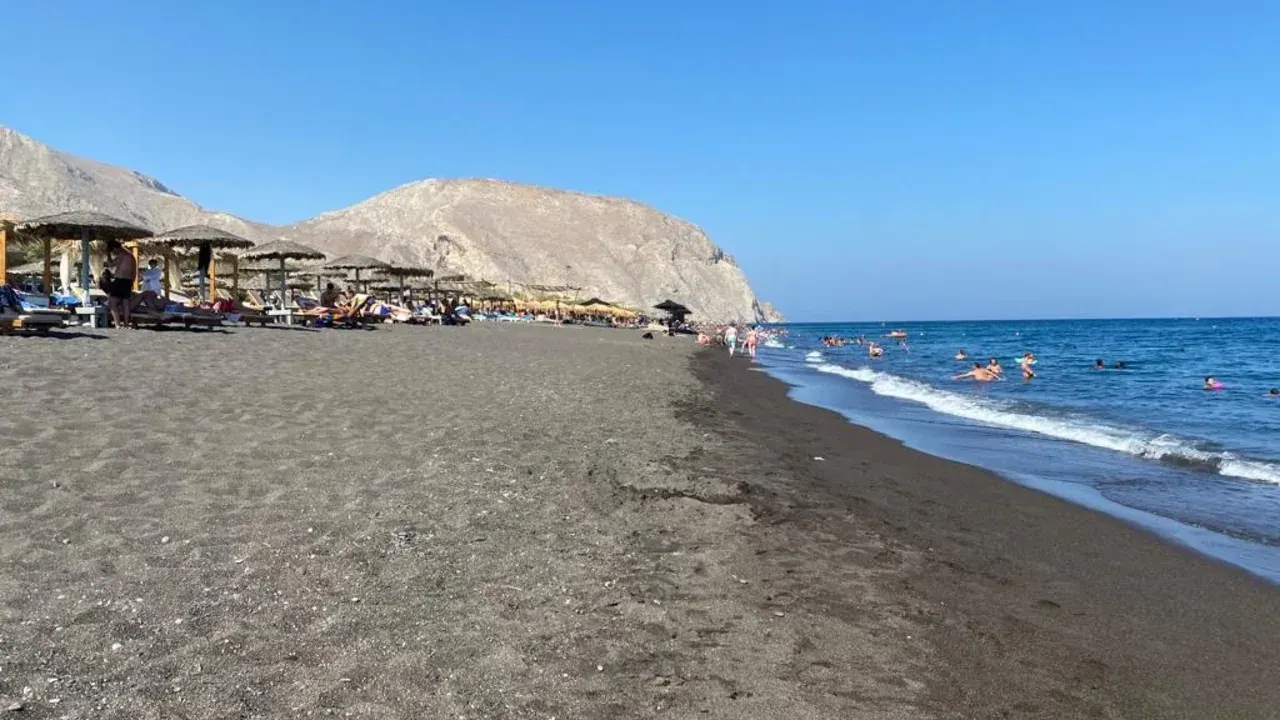
Santorini has a reputation as a place you can only enjoy with a fat wallet, infinity pools, €150 sunset dinners, cave suites that cost more per night than a flight home. That reputation is half true and half marketing. Doing Santorini on a budget is entirely possible; the biggest single lever is what you pay for a sunbed, and Grandma's Recipes on the beach road does generous Greek fast food at the € mark. You just have to base yourself on the right side of the island and spend your money on the right things. The key move is to sleep on the black-sand beach at Perissa, the island's value address, and treat the famous caldera as a series of cheap day trips rather than a place to sleep. This guide breaks down what a frugal day actually costs in euros, what you can do for free, and how to see the postcard side of Santorini without paying postcard prices.
TL;DR: can you do Santorini cheaply?
| Question | Short answer |
|---|---|
| Is a budget trip realistic? | Yes, from a Perissa base, a lean day runs roughly €70–100 per person |
| Where to sleep cheaply? | Perissa / Perivolos, beach rooms far below caldera prices |
| Cheapest way to see the caldera? | The KTEL bus to Fira/Oia (~€2.70), not a tour |
| Biggest free thing? | The black-sand beach and the Mesa Vouno / Ancient Thera hike |
| When to go for value? | Shoulder season, May–June and late Sept–Oct |
| Is tap water drinkable? | Technically safe (desalinated, EU-compliant) but brackish, locals drink bottled; buy or refill big bottles |
My honest take: the single decision that makes or breaks a budget Santorini trip is where you sleep. Base in Perissa, eat at tavernas, move by bus, and the island is affordable. Base on the caldera and you'll haemorrhage money before breakfast. Everything below assumes the Perissa move.
A realistic daily budget (in EUR)
Here's roughly what a careful traveller spends per day, staying in Perissa. Everything is indicative, prices move with season and choice, so treat it as a planning frame, not a quote.
| Item | Budget option | Rough cost |
|---|---|---|
| Bed | Hostel dorm / simple studio (per person) | €25–45 |
| Breakfast | Bakery, coffee, fruit | €4–7 |
| Lunch | Gyros / bakery / beach snack | €6–10 |
| Dinner | Taverna, one block back from the sand | €15–20 |
| Beach | Sunbed free if you order a drink | €0 (or ~€10–20 for a set) |
| Bus to Fira | KTEL, each way | ~€2.70 |
| ATV rental (optional) | Per day, split between two | €25–45 |
| Daily total | Lean, bus-based | ~€70–100 pp |
Add an ATV or a splurge dinner and you climb from there; skip them and you can dip below. The point is that the floor in Perissa is genuinely reasonable by Santorini standards. For rooms, see where to stay in Perissa and the /hotels list.
Free (or nearly free) things to do
Plenty of the best of Santorini costs nothing. The black-sand beach at Perissa and Perivolos is free to lie on. You only pay if you want a rented sunbed, and even then most beach bars waive the fee when you buy food or drinks. The walk up Mesa Vouno to the ruins of Ancient Thera is one of the island's finest half-days, and the mountain itself costs nothing to climb (the archaeological site charges an entry fee, around €10 since the late-2025 fee revision (~€5 reduced), confirm at the gate, and note it's closed Wednesdays, open about 08:30–15:30 otherwise). Wandering the whitewashed lanes and clifftop of Fira or Oia at sunset is free too. You pay only for the bus to get there. See the best beaches near Perissa for the coast and the ridge walk.
How to see the caldera cheaply: take the bus, not the tour
This is where budgets are won or lost. Organised day tours and private transfers are convenient, but the KTEL public bus does most of the same work for a few euros. From Perissa the bus reaches Fira in about 25 minutes for roughly €2.70, and from Fira's central station you connect onward to Oia, Akrotiri and beyond for similar small fares. That means you can watch the Oia sunset, wander Fira's caldera rim, or reach the Akrotiri excavations for a fraction of a tour price. You just work around the timetable. Buses run frequently in season but thin out late, so check the last service back before you commit to a sunset. Our Santorini bus guide has the routes, and seeing the Oia sunset from Perissa shows the cheap way to do the famous evening. For where a budget base fits against the pricier towns, compare Perissa vs Fira vs Oia.
Food, water and other money-savers
Eat where locals eat. A full taverna meal a block back from the beach runs around €15–20; a gyros or bakery lunch is €6–10. Avoid the caldera-edge restaurants in Oia unless you're deliberately splurging. Many carry a steep minimum spend for the view. Self-catering helps: many Perissa studios have a kitchenette, and the supermarkets are far cheaper than restaurants for breakfast and drinks.
On water: Santorini's tap water is desalinated and technically meets EU standards, but it's brackish and locals and visitors drink bottled by preference rather than out of a safety worry. Buy large bottles from the supermarket rather than small ones from kiosks, or bring a refillable bottle and top up from big multipacks; it's a small daily saving that adds up. A reusable water bottle, sunscreen bought before you arrive, and your own beach towel all quietly cut costs. So does taking cash out sensibly, the standalone tourist ATMs and the "pay in your own currency" prompt both skim more than a bank machine would, which our guide to money, ATMs and tipping in Santorini walks through. The /practical-info page covers water, cash and the essentials.
Bus, ATV or car: the cheapest way to get around
Transport is the other place a budget quietly leaks. The KTEL bus is the cheapest option by far, small single fares, no parking, no fuel, and from Perissa it covers Fira and the onward network fine, so long as you plan around the timetable and the last service home. Where it falls short is the quiet beaches, the wineries and anywhere off the main routes, and late evenings when buses thin out. For that, an ATV (quad) at roughly €25–45 a day or a small rental car from about €25–30 a day booked ahead splits cheaply between two or more people and buys real freedom. The trick is not to rent for the whole trip: use the bus on caldera-and-sunset days, then take a quad or car for one or two exploring days. Watch the hidden costs on rentals, insurance excess, fuel policy and a valid licence for quads, which is where cheap desks make their money back.
Go in shoulder season
Timing is the biggest lever after accommodation. July and August are the hottest, busiest and priciest weeks, rooms peak and the beach bakes. The shoulder months, May to June and late September into October, bring warm-enough sea, thinner crowds, and noticeably lower room rates, while the buses and tavernas are all still running. If your dates are flexible, shifting a trip a few weeks either side of high summer can save more than any daily penny-pinching. Our best time to visit Perissa guide breaks down the seasons in detail.
The bottom line
Santorini on a budget isn't about missing out, it's about geography. Sleep on the cheap, beautiful black sand at Perissa; eat at tavernas; move by the €2.70 bus; climb the mountain and lie on the beach for free; and spend your saved money on the one or two experiences that are genuinely worth it, like a sunset or a boat trip. Done this way, the island that everyone calls unaffordable comes in around €70–100 a day, and you still see all of it.
Frequently Asked Questions
How much does a budget day in Santorini cost?
Staying in Perissa, a careful traveller spends roughly €70–100 per person per day, about €25–45 for a dorm or simple studio, €25–35 on taverna and bakery food, small bus fares, and free beach time. Add an ATV rental or a splurge dinner and it climbs; self-cater and use buses and it can dip lower.
What's the cheapest way to see Oia and the caldera?
Take the KTEL public bus, not a tour. From Perissa it's about €2.70 to Fira (~25 minutes), then a cheap onward bus to Oia. You'll see the same sunset and caldera views for a few euros instead of a tour price, just check the last bus back, as evening services thin out.
Can you drink the tap water in Santorini?
Technically yes, the island's tap water is desalinated and meets EU standards, but it tastes brackish, so locals and visitors drink bottled by preference. Buy large bottles from supermarkets rather than small ones from kiosks, or refill a reusable bottle from big multipacks, cheaper and less wasteful than buying small bottles all day.
When is the cheapest time to visit Santorini?
Shoulder season, May to June and late September into October, offers the best value: warm weather and sea, thinner crowds, and lower room rates than July–August, with buses and tavernas still fully running. Avoid the August peak if budget matters. Winter is cheapest of all but many businesses close.