
About Perissa
The black-sand beach village on the southeast coast of Santorini. Its setting under Mesa Vouno, its long beach, and why it makes such a relaxed base for the island.
What Perissa Is
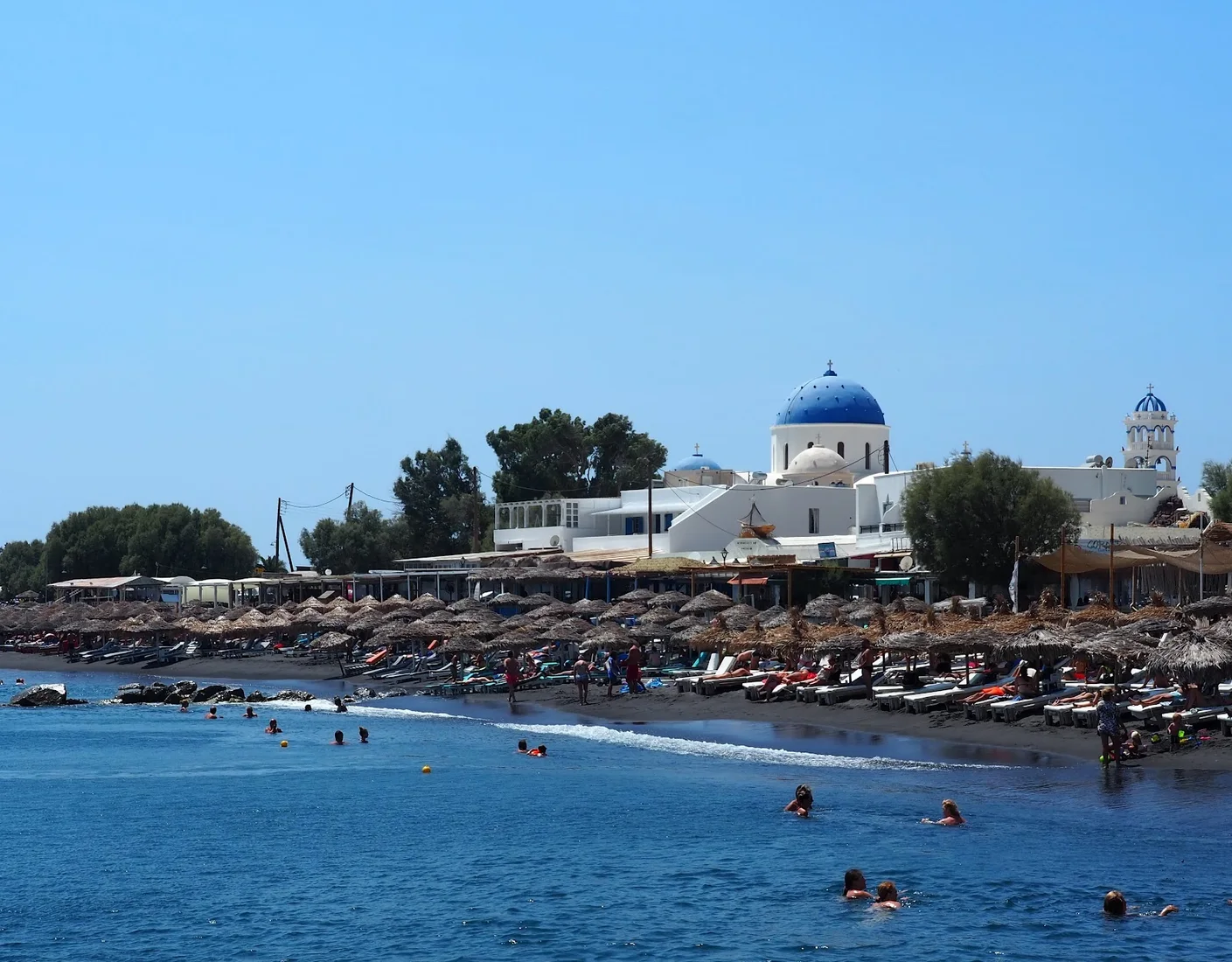
Perissa (Greek: Περίσσα) is a black volcanic-sand beach village on the southeast coast of Santorini (Thira), in the Cyclades, South Aegean. It sits at the foot of the great rock of Mesa Vouno, on the opposite side of the island from the cliff-top caldera towns of Fira and Oia.
The heart of the village is its beach, a long stretch of dark, volcanic sand lined with beach bars and tavernas, which continues south as Perivolos and Agios Georgios to form one of the longest beaches on Santorini. High above, on the Mesa Vouno ridge, stand the ruins of the ancient city of Ancient Thera. Compared with the caldera towns, Perissa is relaxed and better value. A place to swim, eat by the sea, and set out to explore the rest of the island.
Quick reference
Geography
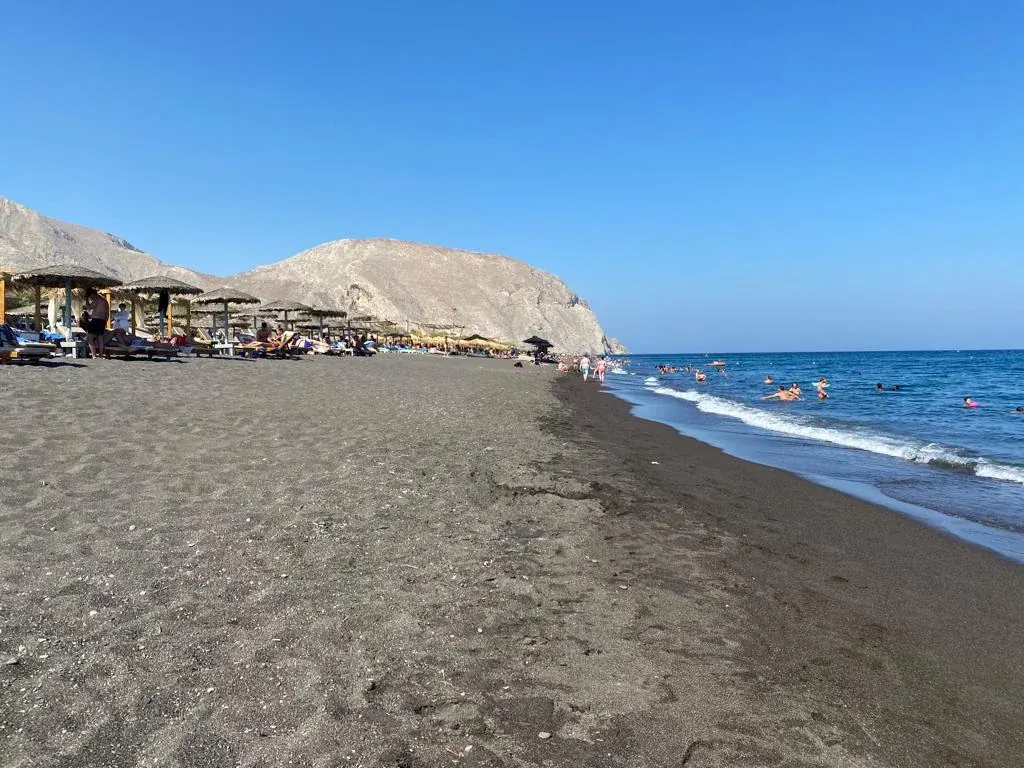
Perissa lies on the southeast coast of Santorini, where the flat coastal strip meets the sea beneath the steep rock of Mesa Vouno. That mountain is the defining feature of the setting: it rises directly behind the village and separates Perissa from the black beach of Kamari on the other side.
The beach itself is the village's spine, a long line of dark volcanic sand running south, without interruption, into Perivolos and Agios Georgios. Together they make one of the longest beaches on the island, backed by beach bars, tavernas and rooms rather than tall cliffs.
The rest of Santorini is close at hand, the caldera villages of Fira and Oia, the wineries inland, and the Minoan site at Akrotiri. For ideas beyond the village, see our day trips guide. To find the local sights, our landmarks guide maps out the beach, the church and Ancient Thera above.
People, Language, and Culture
Perissa is a small, seasonal beach village that comes alive from late spring through autumn, when visitors fill the beachfront and the tavernas. Out of season it is quiet and low-key, the pace of a Cycladic village rather than a resort city.
The everyday language is Greek, but English is widely spoken in the tavernas, beach bars and rooms, so visitors get by comfortably with English alone. The food is Santorinian and Greek: local specialities like fava (the island's yellow split-pea purée) and tomatokeftedes (tomato fritters), fresh seafood and grilled octopus, gyros and souvlaki, and local Assyrtiko wine.
What you feel most as a visitor is the easy rhythm of a beach village: long lunches by the sea, swims through the afternoon, and dinner as the light goes. For the food and drink side of Perissa, see our restaurants guide and our nightlife guide.
Ancient Thera, Above the Village
Perissa's history is written on the mountain above it. High on the Mesa Vouno ridge, on the saddle between Perissa and Kamari, lie the ruins of Ancient Thera. The Greco-Roman city that gave the island its old name. It can be reached on foot by the path up Mesa Vouno, or by road from Kamari, and its terraces look straight down over the black beach below.
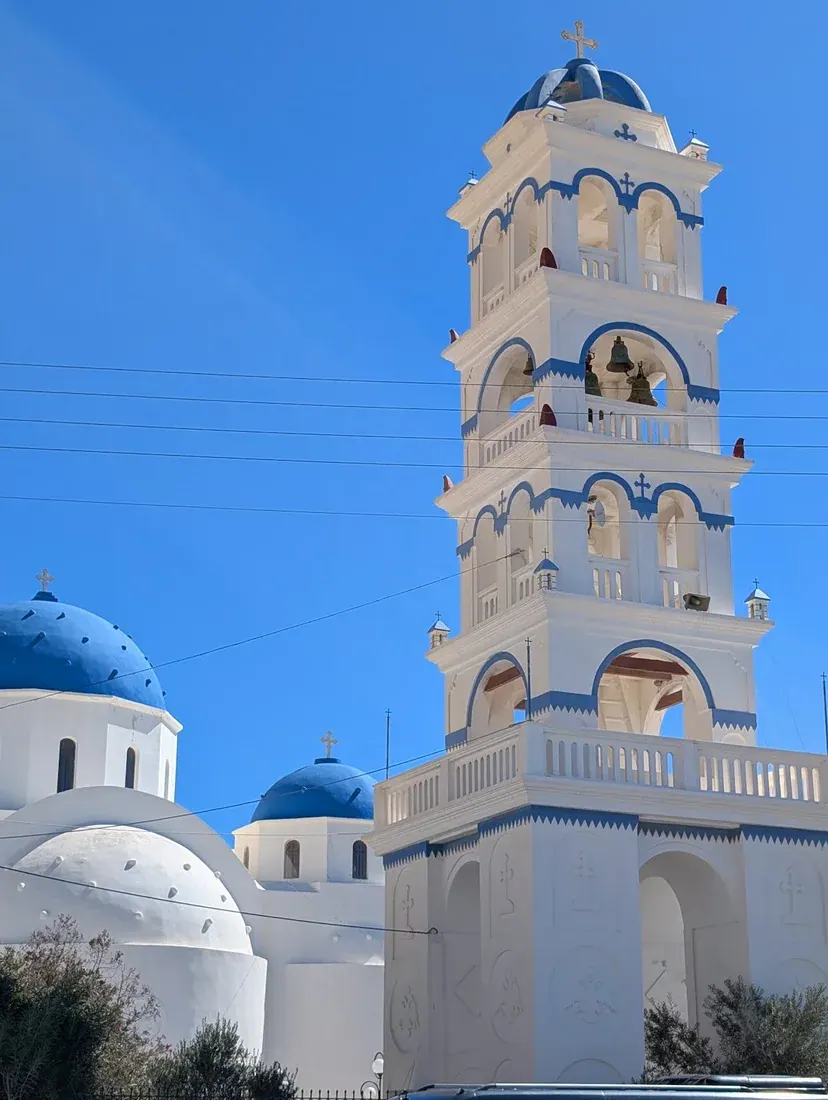
Down in the village, the most prominent building is the large, blue-domed Church of the Holy Cross (Timiou Stavrou / Panagia Katefiani), which stands at the entrance to Perissa. To see these sights for yourself, our landmarks guide covers the beach, the church and Ancient Thera, and the name of the village itself is explained in our name-origin guide.
Climate
Perissa has a dry Mediterranean climate typical of the Cyclades. Summers are hot, sunny and rainless, often with the strong seasonal northerly winds; winters are mild and wetter. The beach season runs from May to October, with July and August the hottest and busiest. Late spring and September are warm and quieter. Many travellers' favourite time to come.
For practical season-by-season planning, see our practical info guide and our getting here guide.
Why Base Yourself in Perissa
Travellers often ask whether to stay in Perissa or up on the caldera at Oia or Fira. Each has its draw. Perissa's specific strengths are these:
- The beach on your doorstep. A long black volcanic-sand beach with bars, tavernas and watersports, running south into Perivolos and Agios Georgios.
- Better value than the caldera. Rooms and meals in Perissa generally cost less than the cliff-top villages, and the mood is relaxed rather than polished.
- Ancient Thera above. The ancient city on Mesa Vouno and the mountain hiking path are right on the village's doorstep. See our landmarks guide.
- A base for the whole island. Oia, Fira, Akrotiri, the wineries and a caldera boat cruise are all within easy reach. See our day trips guide.
To start planning the visit itself, browse our guides to where to stay, things to do, and practical info.
External References
For research, citations, or further reading, the canonical reference for Perissa as a place is:
- Perissa on Wikipedia, overview, geography and the beach
Perissa, Frequently Asked Questions
Where is Perissa?+
Perissa is on the southeast coast of Santorini (Thira), in the Cyclades, South Aegean, Greece. It sits at the foot of the Mesa Vouno mountain, on the far side of the island from the caldera towns of Fira and Oia.
What is Perissa known for?+
Perissa is known for its long black volcanic-sand beach, which continues south as Perivolos and Agios Georgios to form one of the longest beaches on Santorini. It has beach bars, tavernas and watersports, and makes a relaxed, better-value base than the cliff-top caldera towns.
What is the beach like?+
Perissa Beach is a long stretch of dark, volcanic black sand backed by beach bars and tavernas, with sunbeds, umbrellas and watersports in season. The great rock of Mesa Vouno separates Perissa from the black beach of Kamari on the other side.
What is there to see near Perissa?+
Above the village, on the Mesa Vouno ridge, are the ruins of Ancient Thera, the Greco-Roman city reached by a hiking path or road. At the entrance to Perissa stands the large blue-domed Church of the Holy Cross (Timiou Stavrou / Panagia Katefiani). The rest of Santorini, Oia, Fira, Akrotiri, the wineries and a caldera boat cruise, is within easy reach.
Is Perissa a good base for visiting Santorini?+
Yes. Perissa is generally more relaxed and better value than Oia or Fira, with the beach on your doorstep and buses and taxis linking it to the rest of the island. It suits travellers who want beach days plus day trips rather than caldera-edge luxury.
How do you get to Perissa?+
Santorini (Thira) Airport is about 14 km away by road, and ferries dock at Athinios port on the west coast. From Fira, the island capital, local KTEL buses run to Perissa; taxis, car hire and ATV rental are also common.
About this guide
Perissa.net is an independent travel guide to Perissa, written and maintained by the Perissa.net Editorial team. We report from the ground, walking the beach, eating at the tables, and visiting the sights before we recommend them.
Every price, opening time, fare and fact is checked against a primary source, the venue's own site, the site or museum, the transport authority, or the Greek Ministry of Culture, and we flag anything likely to change. Photos are chosen to show the real place, never a stock stand-in, and when we can't verify a detail we leave it out rather than guess.
The guide is updated continually, with each change logged against its sources. If you spot something out of date, we want to know.
Plan Your Visit
The complete travel guide to Perissa. The beach, tavernas, rooms, transport, and everything else you need.
Explore Perissa
Its black-sand beach, the ancient city above it on Mesa Vouno, and an honest take on whether it's the right base for your Santorini trip.
Getting to Perissa, Santorini: Flights, Ferries & Buses
How to get to Perissa on Santorini, flying into Thira airport, ferries to Athinios port, and reaching the black-sand beach by bus, taxi or ATV.
6 min read
The Best Time to Visit Perissa, Santorini: A Seasonal Guide
When to visit Perissa on Santorini, why late spring and early autumn are the sweet spot, what peak summer is like, and how quiet the off season gets.
5 min read
The Best Beaches near Perissa: Santorini's Black-Sand Coast
A guide to the best beaches around Perissa on Santorini. The black volcanic sand of Perissa and Perivolos, the run to Agios Georgios, and Kamari.
5 min read