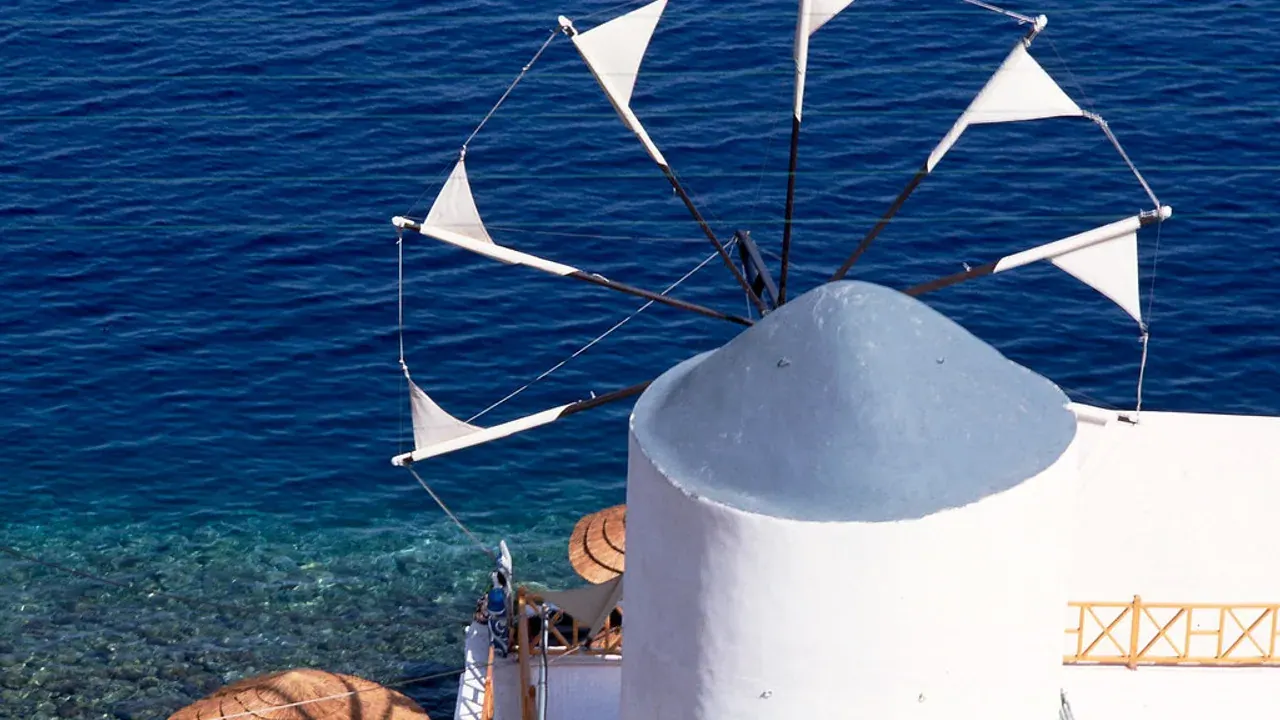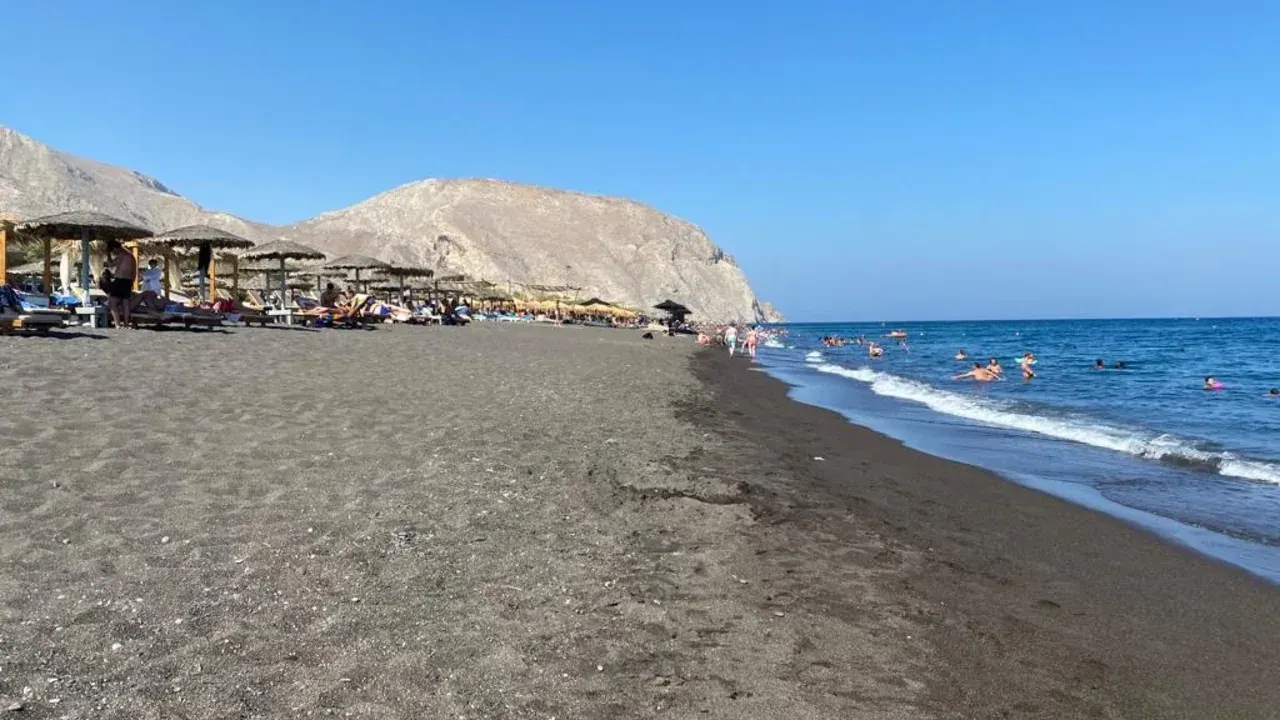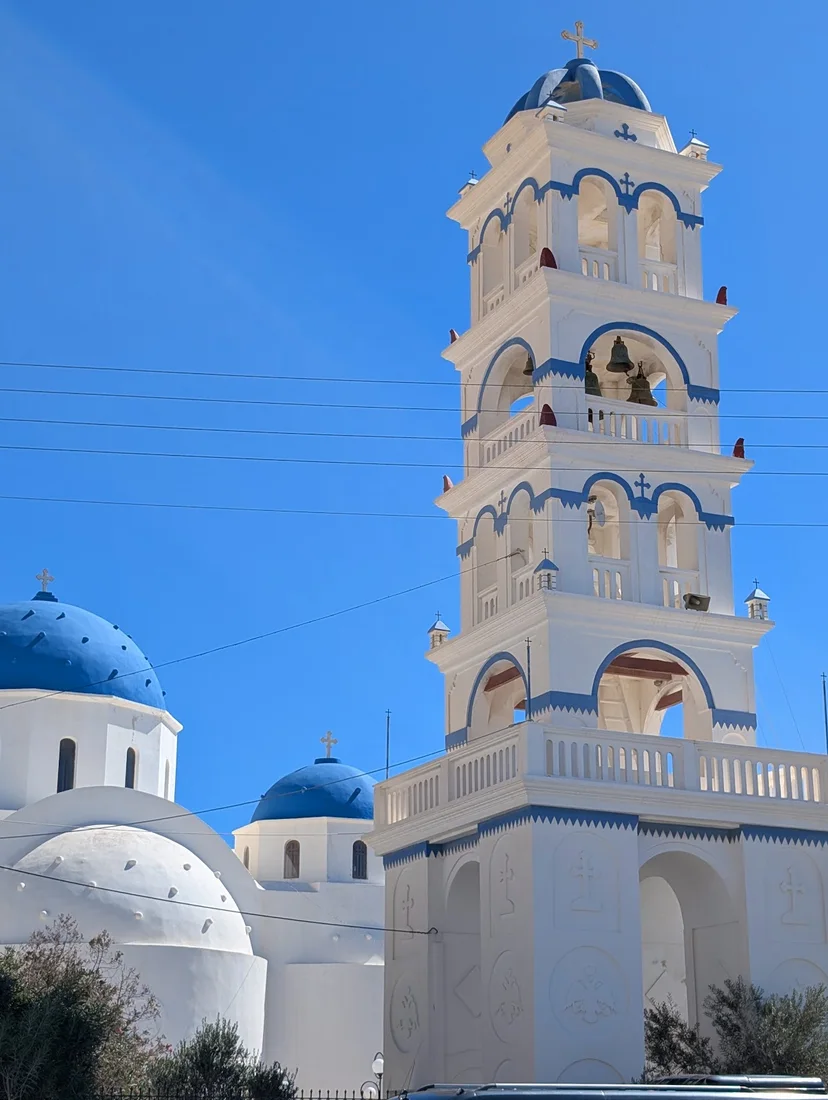
Perissa sits on the southeast coast of Santorini, on the far side of the great rock of Mesa Vouno from the caldera towns. You reach the island the same way everyone does, by air or by sea, and then cross to the black-sand side. Here is how the whole journey works, from the mainland to the beach. For the full breakdown see our getting-here guide.
The two ways onto the island
- By air into Santorini (Thira) National Airport (JTR), the island's only airport, which sits over the hill from Perissa near Kamari.
- By sea into Athinios, Santorini's main ferry port on the west coast.
From either arrival point you finish the trip to Perissa by bus, taxi, transfer or rented vehicle.
Ways in at a glance
| Leg | Option | Time | Cost / notes |
|---|---|---|---|
| Onto Santorini | Fly (Athens + seasonal Europe) | , | Airport 14 km / 20–30 min from Perissa |
| Fast ferry from Piraeus | ~5 h | Docks at Athinios | |
| Conventional ferry from Piraeus | ~7–8 h | Cheaper; docks at Athinios | |
| Port/airport → Perissa | KTEL bus (via Fira) | ~25 min from Fira | ~€2.70, pay the conductor |
| Taxi / pre-booked transfer | Quickest | Only ~25 taxis islandwide, pre-book | |
| Rented ATV / scooter / car | Flexible | Cat-B licence + IDP for non-EU drivers |
Flying in
The airport handles domestic flights from Athens and other Greek cities plus seasonal scheduled international flights from across Europe (most European routes run roughly July–October). The other domestic route worth knowing is from Thessaloniki in the north, Aegean and SKY express fly it in about 1 hour 30, several times a week in season, which saves northern-Greece arrivals the trip down to Athens. It is small and gets busy in peak season, so allow time. Perissa is only about 14 km away by road, a short drive of roughly 20–30 minutes over the hill by Kamari. Reach it by taxi, a pre-booked transfer, or the KTEL bus, but note there is no direct airport–Perissa bus: you change at Fira, the island capital, buying two separate cash-only tickets (airport→Fira about €2, then Fira→Perissa).
Arriving by ferry
Most sea arrivals come from Piraeus, Athens's main port. High-speed catamarans make the crossing in around five hours; slower conventional ferries are cheaper but take around 7–8 hours. Boats also link Santorini with the other Cyclades islands, so Perissa fits easily into island-hopping. All of these dock at Athinios port, from where you continue to Perissa by bus, taxi or transfer.
Ferry timetables and prices change with the season and the operator, and high-season sailings sell out, book ahead in summer and check current schedules before you travel.
Getting from the port or airport to Perissa
Santorini's KTEL bus network is the cheap, reliable backbone. Most services run via Fira, the island's transport hub, so a trip to Perissa often means a change in Fira. A bus meets every arriving ferry at Athinios and runs up to Fira (about 40 minutes, with several stops); from Fira there are frequent buses down to Perissa in season, roughly every 20–30 minutes at peak times, the fare is about €2.70 and the ride takes roughly 25 minutes. You buy tickets from the conductor on board (cash is safest), so keep small change handy. Buses run frequently through the day and into the evening in high summer, thinning right out of season. Check the current timetable, and for a late arrival plan a taxi or transfer instead. Alternatives:
- Taxi or pre-booked transfer, quickest and simplest, but note Santorini has very few taxis (only around 25 for the whole island), and the rank at Athinios is notoriously chaotic when a ferry unloads. If you don't want the bus, book a private transfer in advance rather than gamble on a taxi being free. Our Santorini taxi guide explains why the cabs are so scarce and how to actually get hold of one.
- Rented ATV, scooter or car, popular on Santorini for exploring at your own pace; book early in high summer. Note that quads and scooters legally require a full car licence (Category B), and non-EU visitors need an International Driving Permit alongside their home licence, without it you can be refused the rental or left uninsured.
Getting around once you're here
Perissa is a flat, walkable beach village. The black-sand beach, the tavernas and most stays are within easy reach on foot, and the beach runs south into Perivolos along the same sand. For trips further afield, Oia's sunset, the caldera towns, the ancient sites, use the KTEL bus via Fira or a rented vehicle. See our things to do and practical info for what to do once you've arrived and how to budget for it. To plan the trip itself, see the best time to visit and how many days you need.
Frequently Asked Questions
How do you get to Perissa from Santorini airport?
Perissa is about 14 km from Santorini (Thira) airport, roughly a 20–30 minute drive over the hill by Kamari. Reach it by taxi, a pre-booked transfer, or the KTEL bus, but there's no direct airport–Perissa service, so you change at Fira and pay two separate cash fares (airport→Fira about €2, then Fira→Perissa).
Which ferry port do you use for Perissa?
Santorini's main ferry port is Athinios on the west coast. High-speed ferries from Piraeus take around five hours; from Athinios you continue to Perissa by bus, taxi or transfer.
How do you get around Perissa?
Perissa is a flat, walkable beach village. For trips further afield, use the KTEL bus via Fira or rent an ATV, scooter or car.
Are there taxis at Santorini's port and airport?
Few, and they're not guaranteed. The island has only around 25 taxis in total, and the Athinios port rank gets chaotic the moment a ferry arrives, with long queues. A bus meets every ferry, but if you'd rather not take it, book a private transfer in advance rather than count on a taxi being free.
Do you need a licence to rent an ATV in Perissa?
Yes, quads and scooters legally require a full car licence (Category B) in Greece, and non-EU visitors also need an International Driving Permit alongside their home licence. Without the right paperwork you can be refused the rental or, if you ride anyway, left uninsured.
Do you need a visa, ETIAS or EES to visit Santorini?
Greece is in the EU's Schengen area, so visitors from visa-exempt countries, the US, UK, Canada, Australia and many others, need no visa for short stays (up to 90 days in any 180). Two newer border systems are worth knowing: the EES (Entry/Exit System), which digitally records your photo and fingerprints when you arrive from outside the Schengen zone, has been fully operational across the Schengen area since April 2026 and needs no advance application; ETIAS, a roughly €20 pre-travel authorisation (free for under-18s and over-70s, who still need to apply) for the same visa-exempt travellers, is expected to launch in late 2026 with a transition into 2027, so it isn't required yet. Check its status if you're travelling around then. EU/EEA and Schengen nationals need neither. One practical heads-up: since EES adds a biometric check (photo and fingerprints) on first entry, border queues at Schengen airports have run long through the 2026 peak summer, so allow extra time on arrival.