
What to Eat
Santorini's volcanic-soil produce, fresh Aegean seafood, and the island's wines. The dishes that define Perissa, and where to look for them.
Santorini's volcanic soil and dry, windy climate give its produce an intensity you can taste, tiny sweet tomatoes, silky fava, pale white aubergines, layered with fresh Aegean seafood and the island's celebrated wines. Start with these nine.
Φάβα
Fava
Santorini's signature starter: silky yellow purée from volcanic soil.
Fava is the taste of Santorini, a smooth purée of yellow split peas grown in the island's dry volcanic soil and protected with PDO status. It is served warm, drizzled with olive oil and lemon and topped with raw onion or capers.
A dressed-up version, 'pantremeni' (married) fava, comes topped with sautéed onions and tomato. It appears on almost every taverna menu as a starter or meze, and it happens to be vegan.
- Look for
- PDO Santorini fava, served warm with olive oil and onion
- Best as
- A starter or meze to share
Ντοματοκεφτέδες
Tomatokeftedes
Crisp fritters of Santorini's tiny, intense tomatoes.
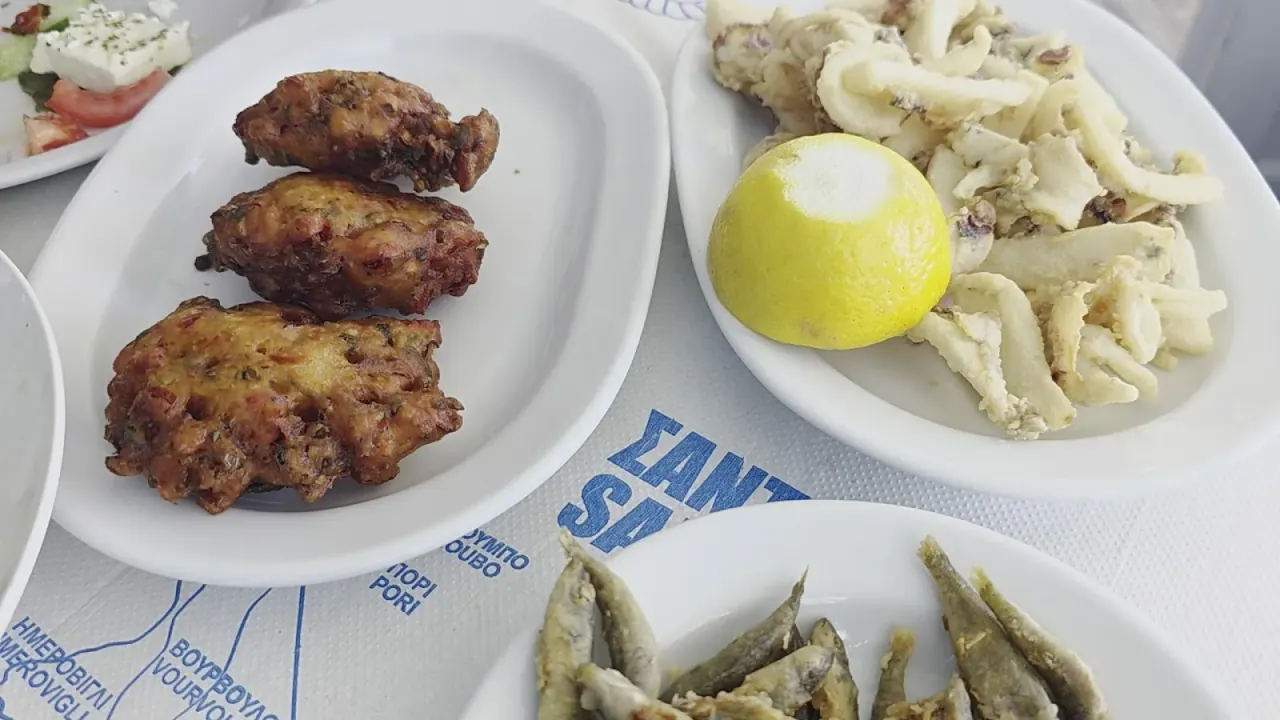
Tomatokeftedes are fritters made from Santorini's small, sweet-sharp cherry tomatoes, the PDO-protected Tomataki Santorinis, grown in the island's volcanic soil since 1875, chopped with onion, mint and herbs, bound with flour and fried until crisp. The island's sun-concentrated cherry tomatoes are famous enough to carry their own PDO status, Tomataki Santorinis, protected since 2013 and grown on the island since the 1870s, and this is the dish that shows them off.
They arrive hot and golden, often with a dollop of tzatziki or fava alongside, a summer meze made for sharing over a cold drink.
- Look for
- Fritters made with local cherry tomatoes and fresh mint
- Best as
- A summer meze with a cold drink
Λευκή Μελιτζάνα
White Eggplant
The island's pale, sweet aubergine, milder than it looks.
Santorini grows a distinctive white aubergine, sweeter and less bitter than the usual purple kind, with few seeds. It turns up grilled, stuffed, or whipped into a creamy dip, and its mild flavour is prized across the island's kitchens.
Look for it as a grilled meze or a spread on bread. A simple way to taste the volcanic-soil produce Santorini is known for.
- Look for
- The pale-skinned local aubergine, grilled or as a dip
- Best as
- A vegetable meze
Κάπαρη
Capers & Caper Leaves
Santorini's wild caper, leaves and all, the island's signature seasoning.
The wild caper bush thrives in Santorini's dry volcanic soil, and the island is famous for it, not only the pickled buds but the tender caper leaves (kappari), stripped from the stalk, brined and eaten in their own right. Their sharp, salty tang is one of the defining flavours of Santorini cooking.
You'll most often meet them piled onto the island's take on a Greek salad, typically made with the local cherry tomatoes, crumbly chloro cheese and a barley rusk, or served alone as a briny nibble with a glass of ouzo.
- Look for
- Pickled caper leaves, not just the buds, in the salad or as a meze
- Best as
- In a Santorini salad or as a salty meze
Ντοματάκι Σαντορίνης
Santorini Cherry Tomatoes
Tiny, intense and dry-farmed, the PDO tomato behind the island's cooking.
The Santorini cherry tomato (tomataki) is small, deep-red and remarkably sweet-sharp, its flavour concentrated by the island's arid volcanic soil. The vines are grown without irrigation, drawing moisture from the humid sea air alone. It carries PDO status and is one of the island's proudest products.
You'll taste it fresh in salads, cooked down into rich sauces, sun-dried, and, most famously, chopped into tomatokeftedes fritters. Much of the crop was once processed at the island's tomato-paste factories, one of which, at Vlychada, is now the Tomato Industrial Museum.
- Look for
- The tiny local tomataki, fresh or in the fritters and sauces
- Best as
- Fresh in a salad, or the base of tomatokeftedes
Χλωροτύρι
Chlorotyri Cheese
Santorini's soft, tangy fresh cheese, a world away from packaged feta.
Chlorotyri ('green', in the sense of fresh and unripened) is a soft, moist, slightly sour cheese made traditionally on Santorini. Pale and almost spoonable, it has a bright, tangy flavour quite unlike the firm, salty feta most visitors expect.
Locals fold it into the island salad with the local cherry tomatoes and caper leaves, spread it on barley rusks, or work it into tomatokeftedes. Ask for it by name. It's one of the most distinctive things you can eat here.
- Look for
- Fresh, soft chlorotyri in the salad or on a rusk
- Best as
- In a Santorini salad or spread on bread
Θαλασσινά
Fresh Seafood
Grilled octopus and fresh fish, straight from the Aegean.
With the sea on the doorstep, seafood is central to Perissa's tavernas. Grilled octopus, tenderised and charred over coals, is the classic, alongside fried calamari, small fish, and whatever the day's catch brings.
Fresh fish is usually sold by weight and grilled simply with olive oil, lemon and oregano. Eat it at a table on the sand with a glass of Assyrtiko.
- Look for
- Grilled octopus and the day's fresh catch, sold by weight
- Best as
- A beachfront lunch or dinner
Γύρος & Σουβλάκι
Gyros & Souvlaki
Greece's street-food staple, quick and cheap.
Gyros and souvlaki are everywhere in Greece and Perissa is no exception. Pork or chicken is carved off the spit or grilled on skewers, then wrapped in a warm pita with tomato, onion, chips and a smear of tzatziki.
It is the go-to fast, cheap meal between beach and bar, a few euros for a filling wrap, eaten on the move.
- Look for
- Meat carved fresh off the spit into a warm pita
- Best as
- A fast, cheap lunch or late-night bite
Μεζέδες
Greek Salad & Mezedes
The sociable Greek table of small sharing plates.
The Greek way to eat is mezedes, a spread of small plates to share: a horiatiki (Greek salad) of tomato, cucumber, olives and feta, dips like tzatziki and fava, dolmades, gigantes beans, fried cheese and grilled vegetables.
On Santorini the salad often carries a local twist, with caper leaves and the island's soft chlorotyri cheese. Order in rounds and let the evening stretch.
- Look for
- A Santorini salad with caper leaves and local cheese
- Best as
- A long shared evening
Λουκουμάδες
Loukoumades
Warm honey doughnuts, the classic Greek sweet.
Loukoumades are little balls of dough, deep-fried until golden and crisp, then drenched in honey syrup and dusted with cinnamon and often crushed walnuts. One of the oldest Greek sweets, they are served hot and eaten with a fork or fingers.
You will find them at cafes and sweet shops around the beach, a simple, indulgent finish to a day in the sun.
- Look for
- Fresh, hot doughnuts drenched in honey and cinnamon
- Best as
- Dessert or an afternoon treat
Ασύρτικο & Βινσάντο
Assyrtiko & Vinsanto
Santorini's volcanic wines, crisp white and sweet amber.
Santorini is one of Greece's great wine islands, its bone-dry, Assyrtiko-based whites carry the Santorini PDO, and its ungrafted vines, spared the phylloxera that wiped out most of Europe's, grow low in basket-shaped 'kouloura' to survive the wind. The star is Assyrtiko, a bone-dry white with bright acidity and a mineral, almost salty edge from the volcanic soil.
After dinner, try Vinsanto. A sweet amber dessert wine made from sun-dried grapes. Wineries around the island offer tastings if you want to go deeper.
- Look for
- A crisp Assyrtiko with dinner, sweet Vinsanto after
- Best as
- With seafood, or to finish a meal
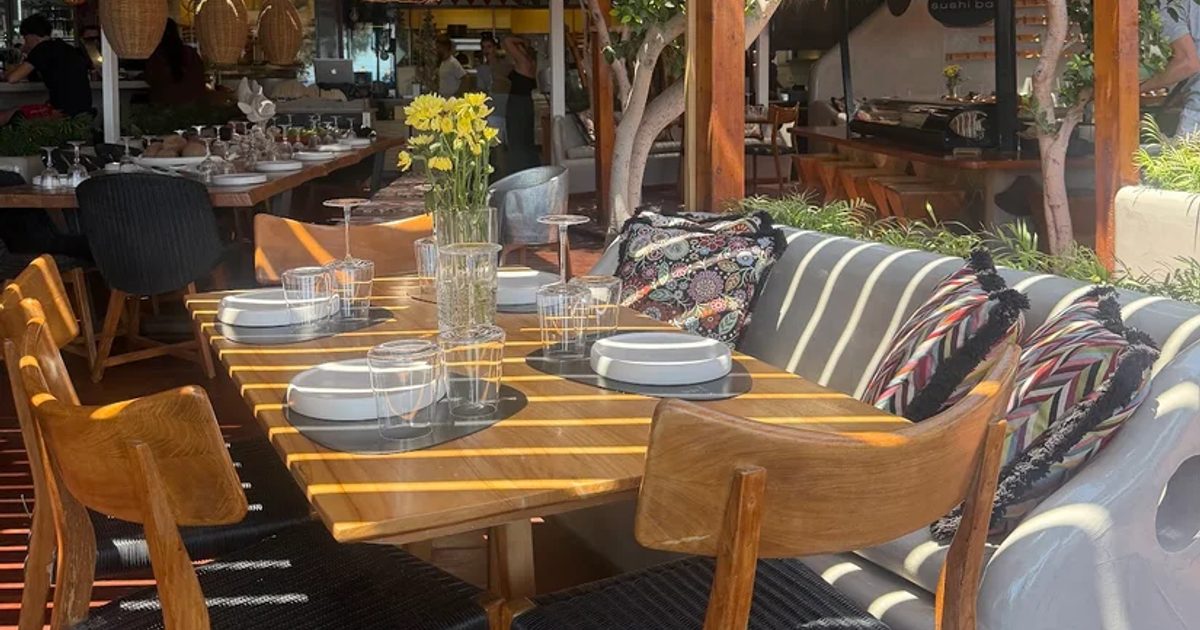
Now find a table
From beachfront tavernas to seafood and Santorini's wines, where to eat these dishes around Perissa.
What to Eat in Perissa, FAQ
What food is Perissa famous for?+
Perissa's food is Santorini's food. The island specialties are fava (a PDO yellow split-pea purée), tomatokeftedes (fritters of the PDO Santorini cherry tomato) and sweet white eggplant, all grown in the volcanic soil, plus plenty of fresh Aegean seafood, grilled octopus above all. Alongside them are the Greek staples of gyros, souvlaki, Greek salad and mezedes, best washed down with a crisp local Assyrtiko wine.
What is fava?+
Fava is Santorini's signature starter: a smooth, warm purée of yellow split peas grown in the island's volcanic soil and protected with PDO status. It is dressed with olive oil, lemon and raw onion, appears on almost every taverna menu, and is naturally vegan, filling and inexpensive.
Is Perissa good for vegetarians?+
Yes. Santorinian and Greek cooking is naturally rich in vegetable and pulse dishes, fava, tomatokeftedes, grilled white eggplant, gigantes (baked butter beans), dolmades, horta (wild greens) and plenty of meze, so a meat-free spread is easy at almost any taverna, and fava is vegan too.
How much does eating out cost in Perissa?+
A gyros or souvlaki is only a few euros, while a sit-down taverna meal of mezedes, seafood and wine costs more. The beachfront tavernas of Perissa are better value than the caldera-view restaurants of Fira and Oia, and prices across Santorini climb in peak summer.
What should I try first?+
Start with a plate of fava and some tomatokeftedes to taste the island's volcanic produce, then a table of fresh seafood, grilled octopus or the day's fish, with a glass of Assyrtiko. Finish with sweet Vinsanto or a plate of loukoumades. For a quick bite between beach and bar, grab a gyros.
Read the food guides
The complete food guide, where locals actually eat, the best seafood, Santorini's wines, and a self-guided food tour.
Where to Eat in Perissa: Tavernas on the Black Sand
A guide to the best places to eat in Perissa and Perivolos on Santorini, seafront fish tavernas, beach-club dining, and lively meze spots on the sand.
9 min read
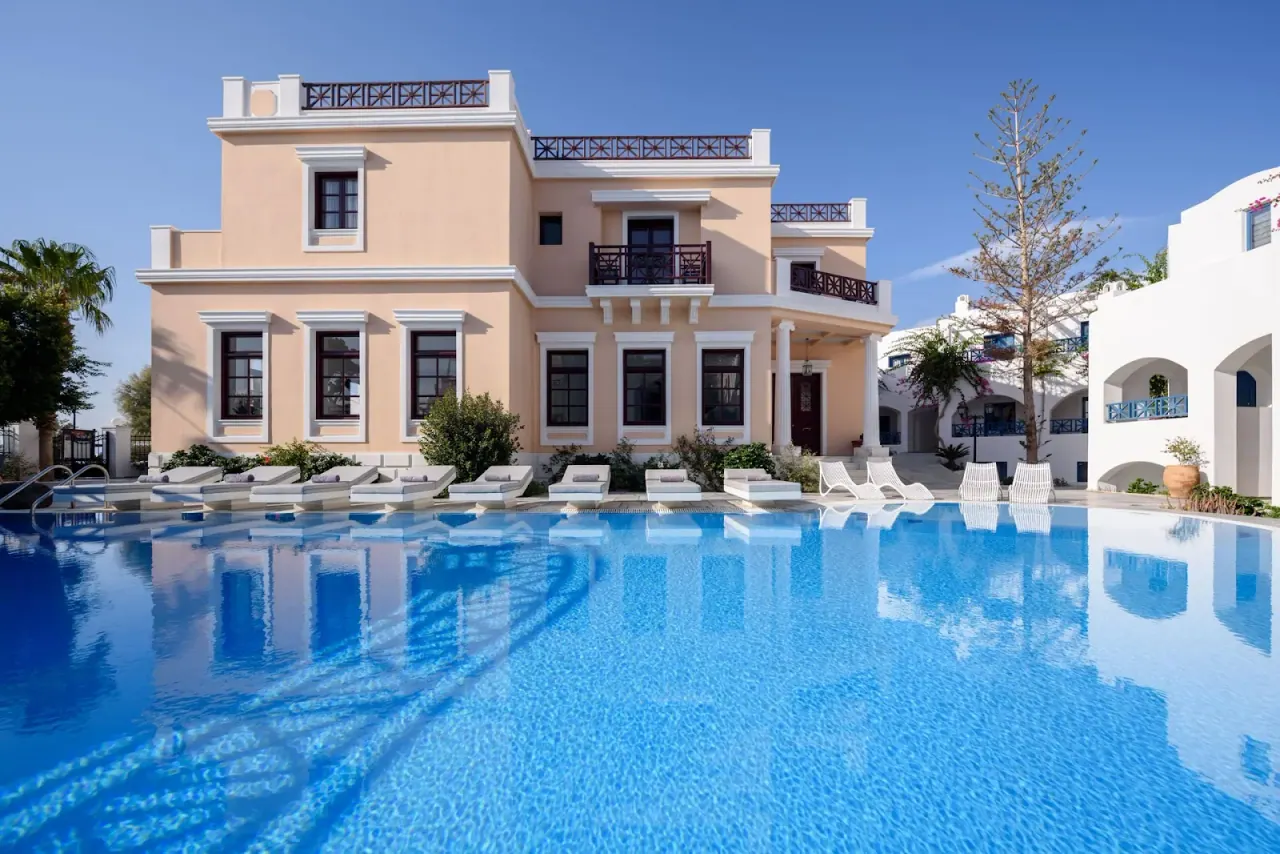
Where to Stay in Perissa: Beachfront Hotels & Studios
Where to stay in Perissa on Santorini, beachfront hotels on the black sand, mid-range studios near the village, budget rooms, plus Perivolos and Kamari.
7 min read
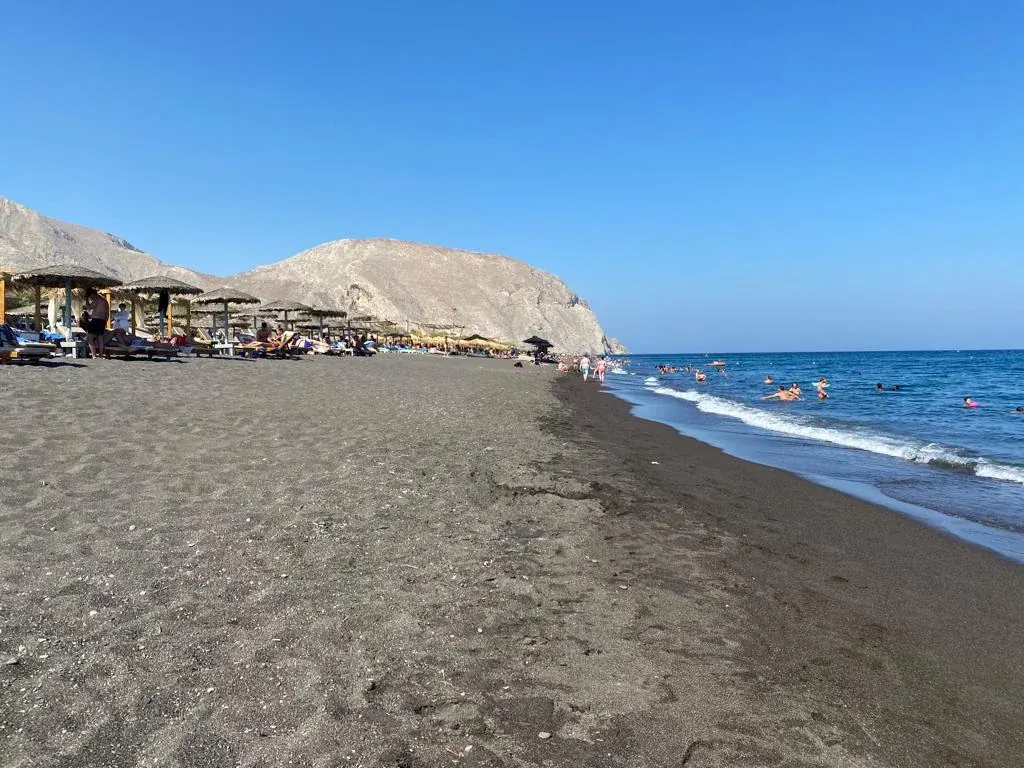
The Best Time to Visit Perissa, Santorini: A Seasonal Guide
When to visit Perissa on Santorini, why late spring and early autumn are the sweet spot, what peak summer is like, and how quiet the off season gets.
5 min read
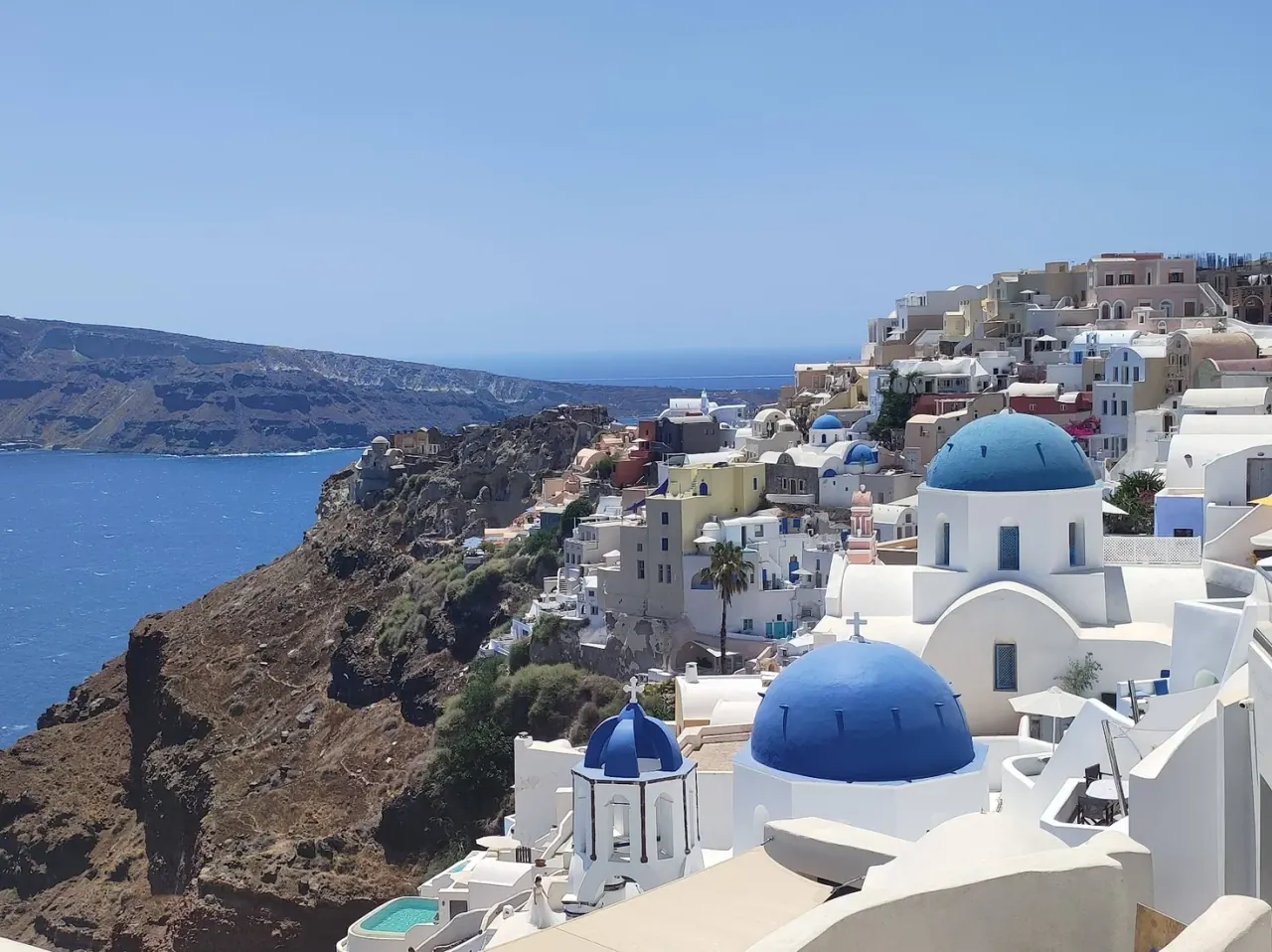
The Best Day Trips from Perissa: Oia, Fira & the Volcano
The best day trips from Perissa on Santorini, Oia and its sunset, the caldera capital Fira, a volcano-and-hot-springs cruise, and Minoan Akrotiri.
5 min read