Santorini is one of the safest destinations in the Mediterranean. Violent crime is rare, the island is heavily touristed and well-policed, and the seismic crisis that made headlines in 2025 has completely passed. The real risks here are the ordinary ones of a hot, cliff-lined volcanic island, the sun, the sea, the cliff edges and, above all, rented quad bikes. Plan around those and a Santorini trip is as safe as they come.
The short answer
Yes, Santorini is very safe to visit in 2026. You are far more likely to come to grief on a rented ATV or from underestimating the midday sun than from crime or the volcano. Here's how the genuine risks actually rank.
| Risk | How real | What to do |
|---|---|---|
| Quad bike / ATV accidents | The #1 cause of tourist injury | Wear the helmet, go slow, be insured, or skip it |
| Sun & heat | High Jun–Sep | Water, shade, hat, midday breaks |
| Cliff edges & Red Beach rockfall | Real but avoidable | Stay behind railings; skip Red Beach |
| Sea (wind, current, hot sand) | Occasional | Swim between flags; sandals on black sand |
| Crime | Very low | Normal precautions in crowds |
| Earthquakes / volcano | Resolved since mid-2025 | Nothing, monitored continuously |
Crime: very low
Greece has low rates of violent crime, and Santorini, where the whole economy runs on tourism, is safer still. Serious crime against visitors is rare. What little exists is petty theft in the summer crush: pickpocketing on packed buses, at viewpoints and in nightlife crowds. Keep your phone and wallet secure, don't leave bags unattended on the beach, and you'll almost certainly have no trouble. Solo and female travellers generally find Santorini very comfortable, including after dark in Fira, Oia and the beach villages. Our solo travel in Santorini guide covers doing the island alone in full.
The 2025 earthquakes: and why they're no longer a concern
For a few weeks from late January 2025, Santorini and neighbouring Amorgos were rattled by an extraordinary earthquake swarm, tens of thousands of mostly-small tremors over the following months, the strongest just above magnitude 5. Schools closed, some residents left temporarily, and the story went worldwide. Scientists traced it to magma moving deep beneath the seafloor between Santorini and the underwater Kolumbo volcano, rather than an imminent eruption.
The important part for travellers: the swarm fully subsided by mid-2025, and the island has been calm ever since. The volcano and the fault system are monitored continuously by Greek and international scientists. Hotels reopened, cruise ships returned, and by 2026 the island is operating a completely normal season. There is no ongoing earthquake or eruption danger to visitors. The caldera you sail across is a long-dormant giant that last erupted, mildly, in 1950.
The risk everyone underestimates: quad bikes
If Santorini has a genuine danger, it is the rented ATV or quad bike. They look like the fun, breezy way to island-hop, and every summer they send a steady stream of tourists to the clinic in Fira. The combination of inexperienced riders, gravelly roads, blind clifftop bends, flip-flops and busy summer traffic is exactly as risky as it sounds. If you rent one: wear the helmet, ride slowly, confirm you're properly insured, and never ride after drinking. For many visitors the buses (a flat, cheap network through Fira), taxis, or a small rental car are the smarter call. See our Santorini bus guide and getting to Perissa.
Sun, cliffs and the sea
The everyday hazards of a volcanic island in a Greek summer are the ones actually worth respecting:
- The sun. June to September is fierce. Carry water, wear a hat and sunscreen, and take shade at midday. The Ancient Thera ridge and the caldera path have almost none.
- Cliff edges. The caldera drops hundreds of metres. Stay behind railings for photos, and mind loose ground at unfenced viewpoints.
- Red Beach. Santorini's famous red cove sits under crumbling, unstable cliffs and has been officially restricted for years; the safe way to see it is from a boat, not standing beneath the rockfall.
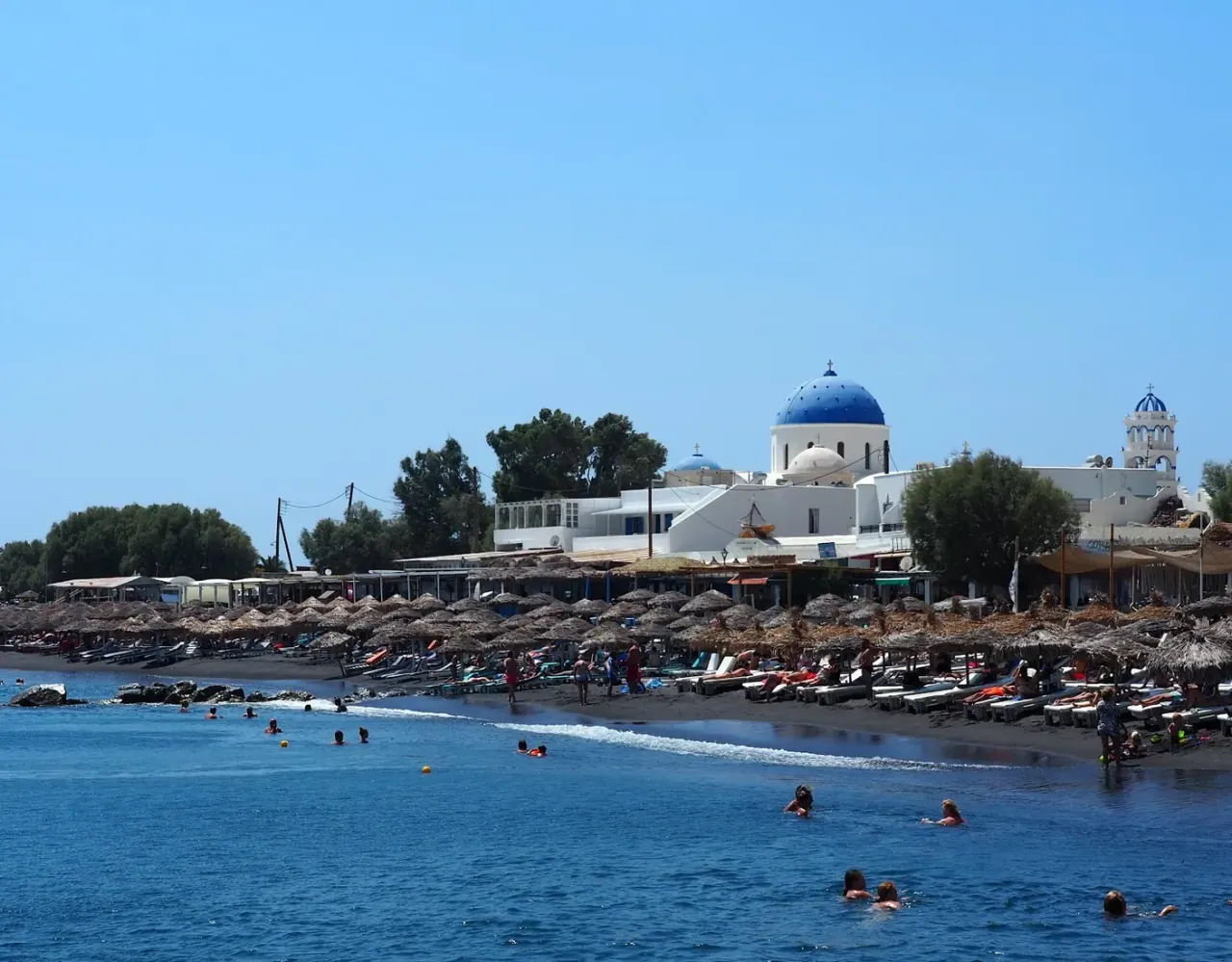
- The sea. Perissa and Perivolos are long, open beaches, swim between flags, watch for the occasional strong afternoon wind, and remember the black sand gets blistering hot by midday, so wear sandals to the water's edge.
Practical safety notes
- Emergency number: dial 112 anywhere in Greece (and the EU) for police, ambulance or fire, in English.
- Healthcare: Santorini has a general hospital in Fira and pharmacies in the main towns; travel insurance is strongly recommended, especially if you plan to ride an ATV.
- Water: tap water on Santorini is largely desalinated and best treated as non-potable for drinking, stick to bottled or filtered water, which every shop sells cheaply.
For a wider sense of whether the black-sand side of the island suits you, see is Perissa worth visiting; to time your trip around the crowds and heat, see the best time to visit Perissa.
Frequently Asked Questions
Is Santorini safe after the 2025 earthquakes?
Yes. The intense earthquake swarm that shook Santorini and nearby Amorgos from late 2024 into 2025, tens of thousands of small tremors driven by magma movement deep offshore, fully subsided by mid-2025, and the island has been calm since. Authorities monitor the volcano continuously, hotels are open for the season, and normal tourism resumed. There is no ongoing seismic danger to visitors in 2026.
Is Santorini safe for solo and female travellers?
Yes. Greece has low violent-crime rates and Santorini is a heavily-touristed, well-policed island where solo and female travellers are generally very comfortable, including at night in the main towns. Take the same sensible precautions you would anywhere. Watch your drink, keep valuables secure in crowds, and use licensed taxis or booked transfers late at night.
What is the biggest real safety risk on Santorini?
Rented quad bikes and ATVs, by a wide margin. Every summer they cause the most tourist injuries on the island, inexperienced riders, gravel, blind bends and busy roads are a bad mix. If you rent one, wear the helmet, go slowly, and make sure you're insured; many visitors are better off with buses, taxis or a small car.
Is it safe to swim at Perissa and Santorini's beaches?
Generally yes. Perissa and Perivolos are long, open black-sand beaches; swim between any flags, mind the occasional afternoon wind and current, and note the dark sand gets scorching underfoot at midday. Wear sandals to the water. Avoid the restricted Red Beach, which sits under unstable rockfall cliffs.