Ancient Site · Greco-Roman city (Dorian, Hellenistic & Roman)
Ancient Thera
Updated 2026·Checked on foot·On the ridge of Mesa Vouno, between Perissa and Kamari
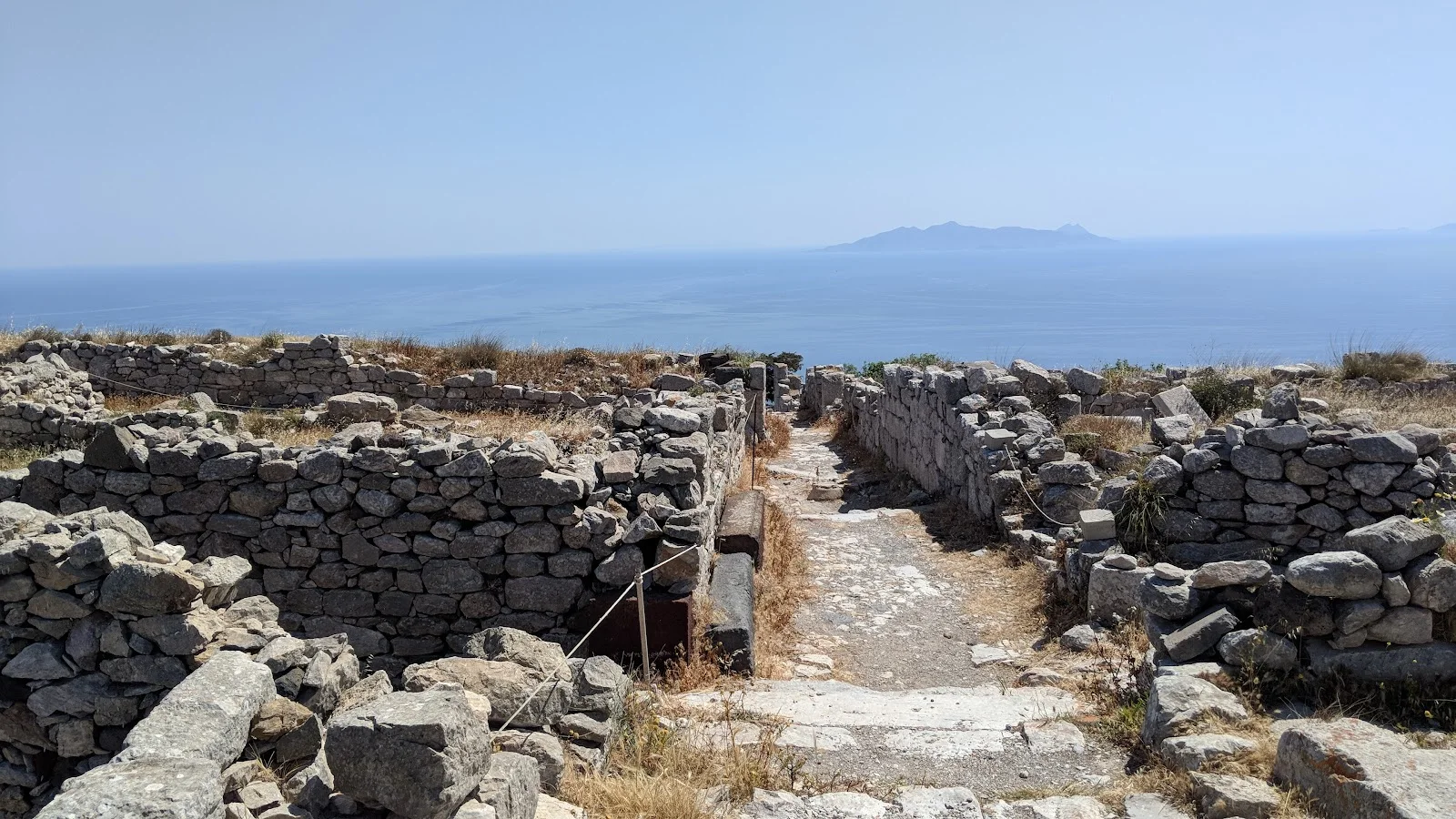
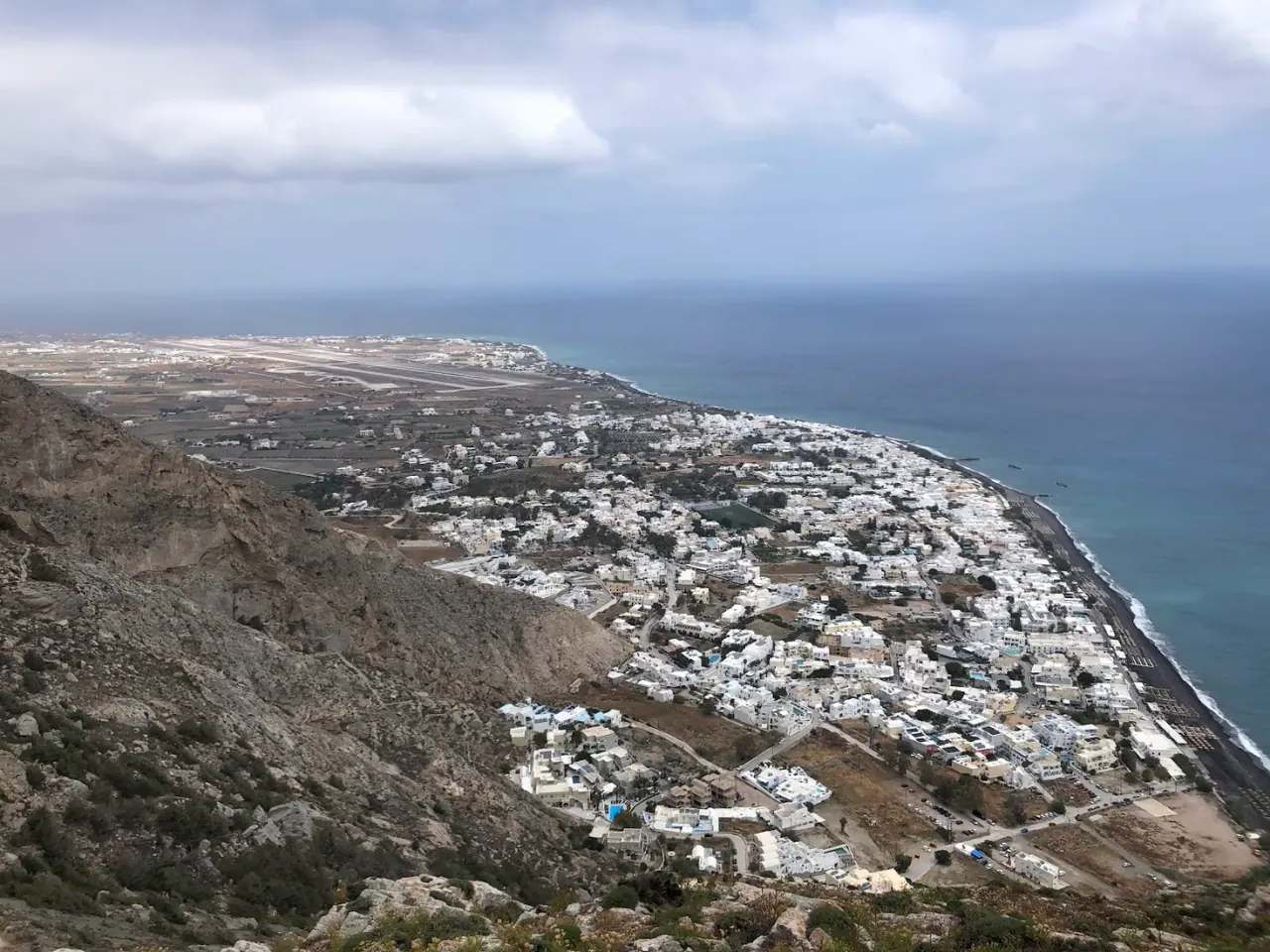
Ancient Thera is the ruined Greco-Roman city that crowns the long ridge of Mesa Vouno, its terraces, streets and temple foundations strung out high above Perissa and Kamari with the Aegean on both sides.
Ancient Thera · Greco-Roman city (Dorian, Hellenistic & Roman)
Period
Greco-Roman city (Dorian, Hellenistic & Roman)
Location
On the mountain ridge high above the village
Entry
Around €10 (raised from €6 in the late-2025 revision; about half reduced, free for under-18s & EU under-25s) · a €15 three-day ticket also covers Akrotiri and the Museum of Prehistoric Thera. Confirm the current rate at the gate
Hours
Usually daily except Wednesday, roughly 08:30–15:30, seasonal, so check current times
Time Needed
1.5–2 hours on site, plus the climb or drive
Rating
4.6★ · 2,991 reviews
Hours and prices last checked 2026, they change, so confirm on the day.
History
How it came to be
Founded by Dorian settlers from Sparta, traditionally in the 9th century BCE, the city grew grandest in the 3rd century BCE, when Ptolemaic Egypt made it the naval base for its Aegean fleet and rebuilt it on a regular grid with officers' houses and a sanctuary to the Egyptian gods. Occupying the naturally defensible spine of Mesa Vouno, it stayed in use through the Roman period, for over a thousand years. Excavations have revealed houses, an agora, temples, cisterns and rock-cut inscriptions strung along the ridge.
What You'll See
On a visit
The long processional street, house and temple foundations, cisterns and rock carvings, and the huge views down to Perissa on one side and Kamari on the other.
How to Visit
Reached by a steep road from the Sellada saddle above Kamari, or on foot by a demanding path up from Perissa or Kamari. Wear sturdy shoes and bring water and sun protection.
Best Time
Early morning for cooler air and clear light along the ridge
Gallery
Getting There
Location
On the mountain ridge high above the village · On the ridge of Mesa Vouno, between Perissa and Kamari
You can drive up via the Sellada saddle above Kamari, or hike the steep path up from Perissa or Kamari. The site sits about 370 m above the sea; the Perissa footpath is short but steep, gaining around 350 m in roughly 45 minutes to an hour, so bring water, sun protection and good shoes.
Yes, especially for the setting, a whole Greco-Roman city laid out along a high ridge with sweeping views over both Perissa and Kamari and the open sea.