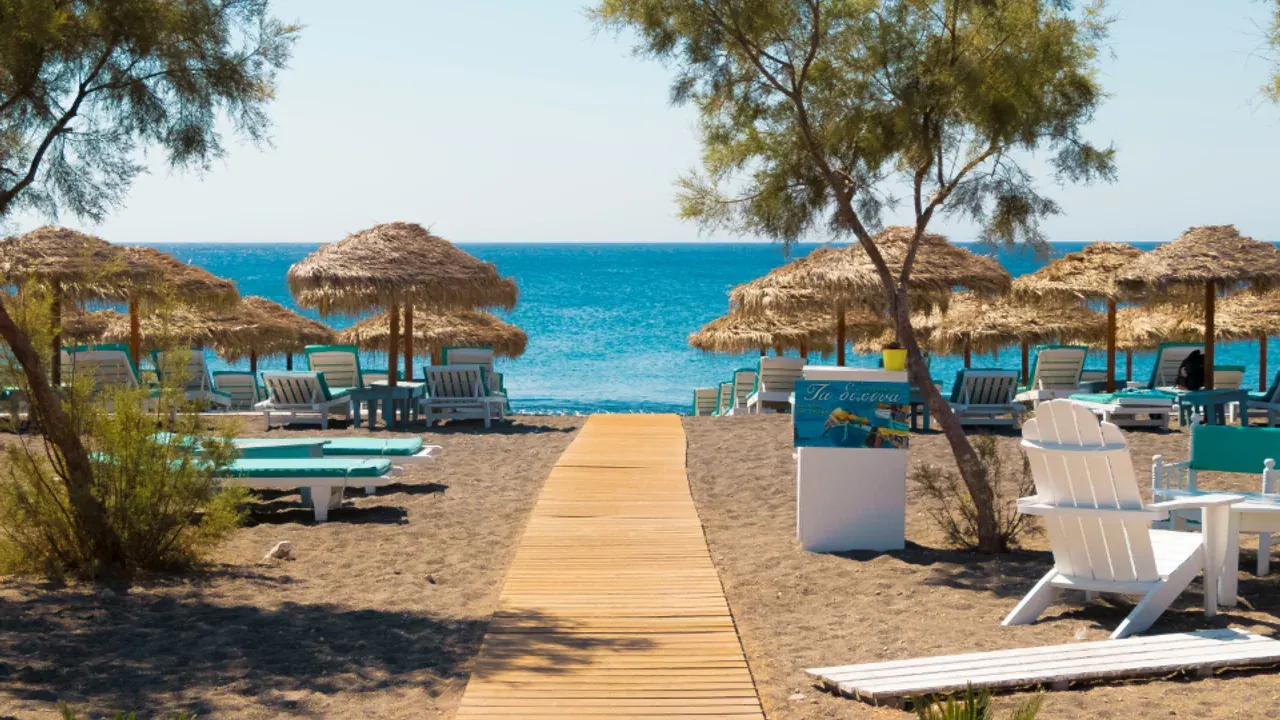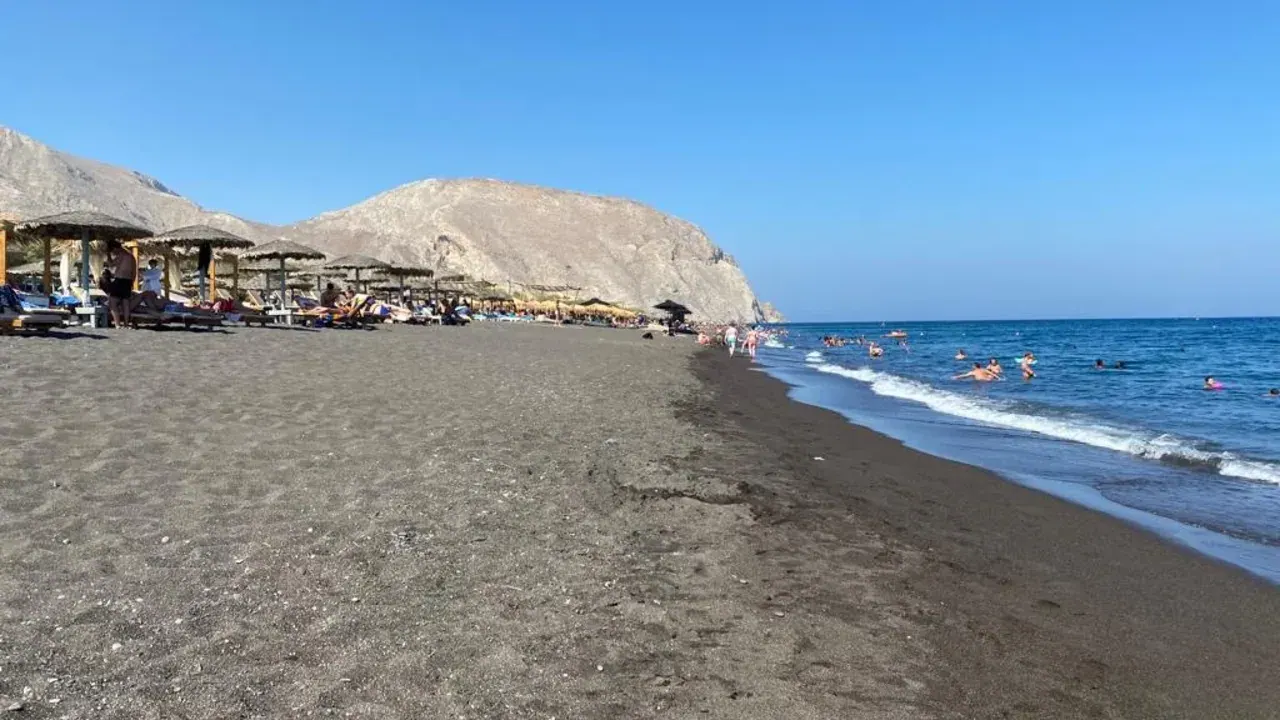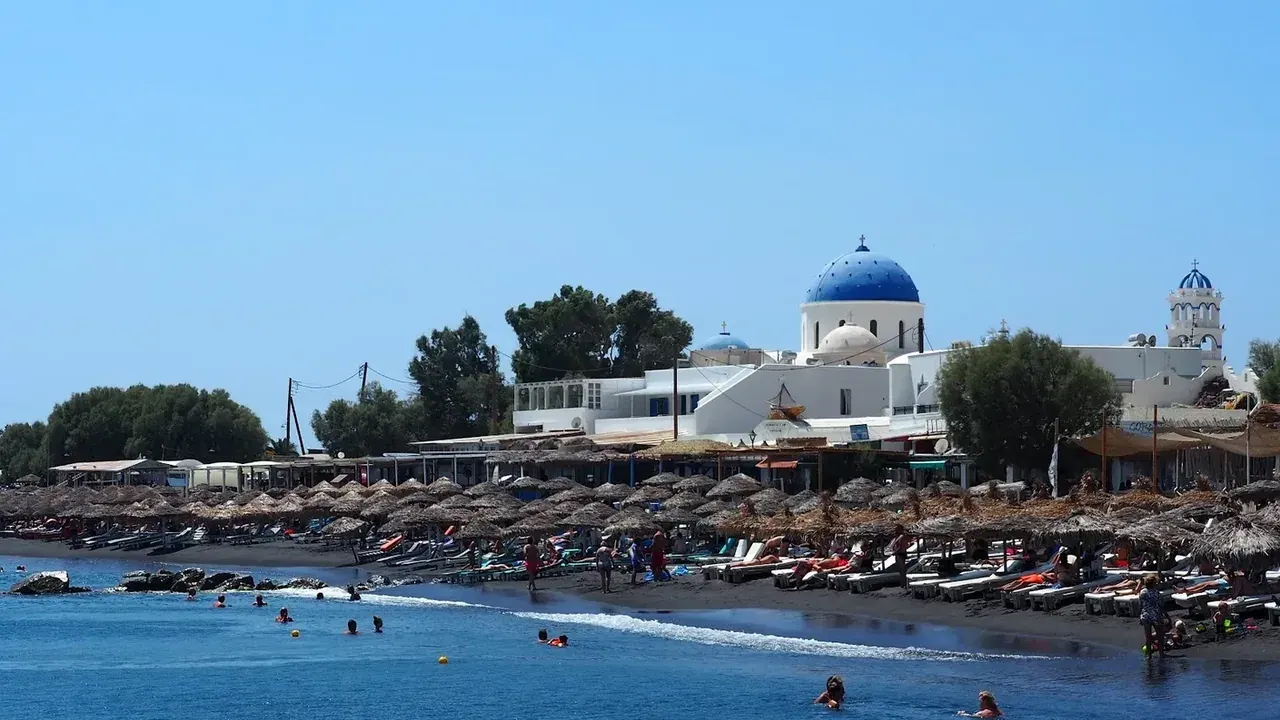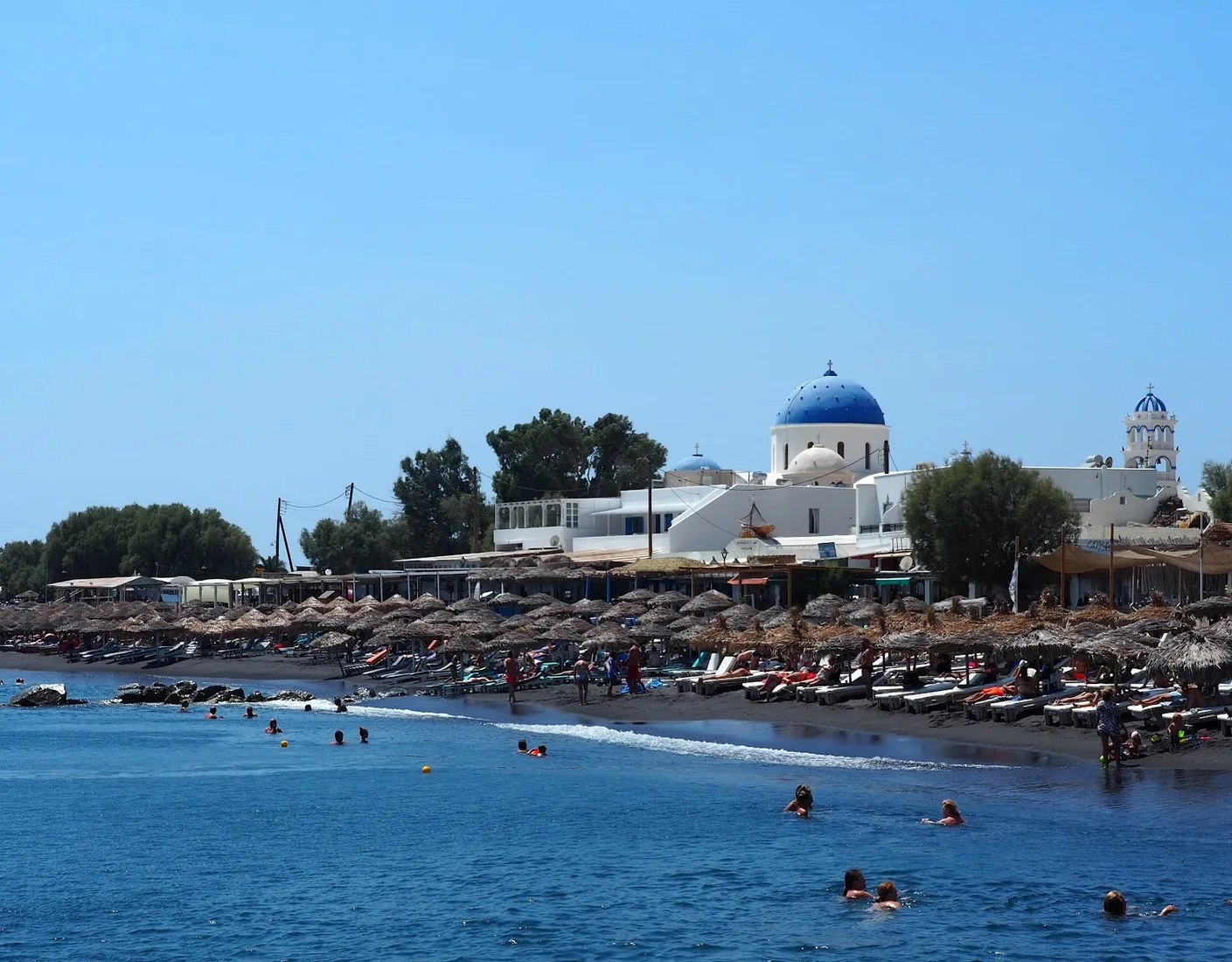
Santorini in August is the island at full volume: the hottest weather of the year, the warmest sea, the longest restaurant queues and the very top prices. It is the absolute peak of the season, a notch busier and hotter than July, spectacular if you want guaranteed heat and a buzzing island, punishing if you pack for it wrongly, harder work if crowds and cost matter to you. The saving grace is the coast: base yourself on the black-sand southeast at Perissa and you get the warm sea and long beach days while the worst of the crush stays over on the caldera. Here's exactly what August throws at you, and how to plan around it.
TL;DR: Santorini in August at a glance
| Question | Short answer |
|---|---|
| How warm is it? | Hot, daytime highs around 29–32°C, with heatwave spikes higher |
| Is the sea warm? | Warmest of the year, around 25–26°C, bath-warm swimming |
| Is it windy? | The meltemi north wind can blow hard for days, cooling the air and churning the sea |
| Is it busy? | The busiest month of the year, the absolute peak, and Aug 15 is the maddest |
| Are prices high? | The highest of the year, book everything well ahead |
| Best for | Guaranteed heat and warm sea, if you can handle peak crowds and cost |
August weather in Santorini
August is hot, dry and reliably sunny. The peak of a Cycladic summer. Daytime highs sit around 29–32°C, and heatwaves can push well past that, while the black volcanic sand and rock radiate heat that makes it feel hotter still. Evenings stay warm at around 23–25°C, so dinner rarely needs more than a light layer. Rain is effectively nil. Most Augusts see no measurable rainfall at all. The defining feature is the meltemi, the strong dry north wind that blows across the Aegean through July and August, sometimes for several days at a stretch: it brings welcome freshness to the sweltering heat, but it can also whip up the sea and disrupt boat trips.
| Measure | Early August | Late August |
|---|---|---|
| Avg daytime high | ~31°C | ~30°C |
| Avg overnight low | ~24°C | ~23°C |
| Sea temperature | ~25°C | ~26°C |
| Daylight | ~13.6 hrs | ~13 hrs |
| Rainfall (whole month) | ~0–2 mm total | , |
| Crowd level | Peak | Peak |
These are cross-checked seasonal averages, not a forecast. August is about as dependably hot and dry as the Mediterranean gets. The main variable is the meltemi, which some years is barely there and others blows hard for a week.
Is the sea warm in August?
Yes. This is the warmest the sea gets all year, around 25–26°C, genuinely bath-warm and ideal for long swims and snorkelling. The long black-sand stretches of Perissa and Perivolos come into their own: warm sand, warm water and relentless sun make it a proper beach month. The one caveat is the meltemi, when the north wind is up, the exposed and north-facing beaches turn choppy and gusty, though Perissa and Perivolos on the sheltered southeast coast usually stay more swimmable than the wind-hit spots. For the pick of the coast, see the best beaches near Perissa. The warm sea holds well into the shoulder season, too. Our Santorini in September guide covers the quieter tail of summer.
Crowds in August: the absolute peak
August is the busiest month of the year, full stop. Cruise ships stack up in the caldera, Oia's sunset viewpoints are shoulder-to-shoulder, Athinios port is chaotic, and the best restaurants need reservations days ahead. Mid-August is the maddest of all: the Assumption of the Virgin (Dekapentavgoustos, 15 August) is one of Greece's biggest holidays, and Greek domestic tourists flood the Cyclades around it, on top of the international peak. If your dates are flexible, the very end of August eases slightly as the first families head home for the school year.
As always, where you sleep changes the whole trip. The crush concentrates on the caldera at Fira and Oia; the southeast coast around Perissa and Perivolos stays comparatively relaxed even in August, which is the strongest possible argument for basing on the black-sand side and treating the caldera as a series of day trips. Weigh August against the calmer, cheaper shoulder months in our best time to visit Perissa guide, many people find June or September a better balance of warm sea and thinner crowds.
Surviving the August heat and crowds
August rewards a beat-the-heat rhythm: beach early while the sun is kinder, retreat through the ferocious midday hours, then head out again for the late afternoon and sunset. The exposed excursions that are merely warm in spring become genuinely punishing now, the Nea Kameni volcano walk, the caldera-rim path and the Ancient Thera ruins and Mesa Vouno hike above Perissa should all be done first thing in the morning, with a hat, real sun protection and plenty of water, because the black ground radiates heat and there is little shade. Save the boat trips, wineries and beach lounging for the day's hotter stretches.
Because everything sells out at peak, book ahead is the rule for August, not the exception: catamaran cruises, the volcano-and-hot-springs tour, sunset sailings, the best Oia and Fira dinner tables, and ATV or car rentals all go early. Lock the big-ticket items in before you arrive rather than hoping for walk-up space.
August also has a cultural side worth knowing about for cooler evenings off the beach: the Megaron Gyzi Festival, the island's long-running classical-music festival, marking its 40th anniversary in 2026, stages free chamber-music concerts inside the 17th-century Megaro Gyzi mansion in Fira, across a handful of early-to-mid-August nights (3, 6, 10 and 13 August in 2026). It's a refined, air-cooled alternative to another sundowner, an easy trip up from Perissa; check the current programme before planning around it.
Getting around and booking in August
August runs the full peak-season timetable, so transport is frequent, but everything is busy. The KTEL buses link Perissa with Fira (roughly 25 minutes, about €2.70), with onward changes for Oia, Athinios port and the airport near Kamari; expect them to be packed at peak times. Ferries and flights run their densest summer schedules, so island-hopping to Ios, Naxos or Paros is easy, but popular sailings and flights sell out well ahead in August, so book them as early as you can, especially around the 15 August holiday. For buses, cash and other logistics, see the practical-info page.
Frequently Asked Questions
Is August a good time to visit Santorini?
August guarantees the hottest weather and the warmest sea of the year, with everything fully open, but it's also the busiest and most expensive month, with peak crowds and the meltemi wind. It's great if you want dependable heat and a buzzing island and don't mind the crush; if crowds or cost matter, June or September offer similar warmth with more space.
How hot is Santorini in August?
Very hot, daytime highs of around 29–32°C, with heatwaves pushing higher, and warm evenings around 23–25°C. Rain is virtually nil. The black volcanic sand and rock radiate heat, so exposed hikes are best done early with plenty of water.
Can you swim in Santorini in August?
Yes. The sea is at its warmest, around 25–26°C, bath-warm and ideal for swimming. The black-sand beaches of Perissa and Perivolos are perfect for full beach days, though when the meltemi north wind blows, exposed beaches turn choppy while the sheltered southeast coast usually stays calmer.
Is Santorini crowded in August?
It's the busiest month of the year, the absolute peak, with cruise crowds, packed sunsets and restaurants needing reservations days ahead. Mid-August around the 15 August Assumption holiday is the most crowded of all. Basing on the quieter Perissa side keeps things calmer while you day-trip to the caldera.