The Mesa Vouno hike is the one walk almost every Perissa guest thinks about doing: the great bare rock that closes off the north end of the black-sand beach also carries a footpath straight up its flank to the ruined Greco-Roman city of Ancient Thera, and on over the ridge down to Kamari on the far side. It is a short trail but a serious one, steep, rocky and fully exposed to the sun, so the question is less "can I do it?" and more "how do I do it without cooking on the mountainside?" This guide covers the distance, the climb, the timing and exactly what to bring so you get the views without the drama.
TL;DR: the Mesa Vouno hike at a glance
| Question | Short answer |
|---|---|
| Where it goes | Up the west face of Mesa Vouno from Perissa to Ancient Thera (~370 m ridge), optionally down to Kamari |
| Ascent time | Roughly 45–60 minutes up from Perissa to the site (steeper hikers do it in ~40) |
| Elevation gain | About 350–360 m from beach to ridge |
| Difficulty | Hard, steep, loose rock, no shade, no water on the trail |
| Best time to go | Early morning, ideally at first light before the sun hits the face |
| Combine with | The Ancient Thera archaeological site at the top (~€10), then descend to Kamari or back to Perissa |
The route: Perissa up to the ridge
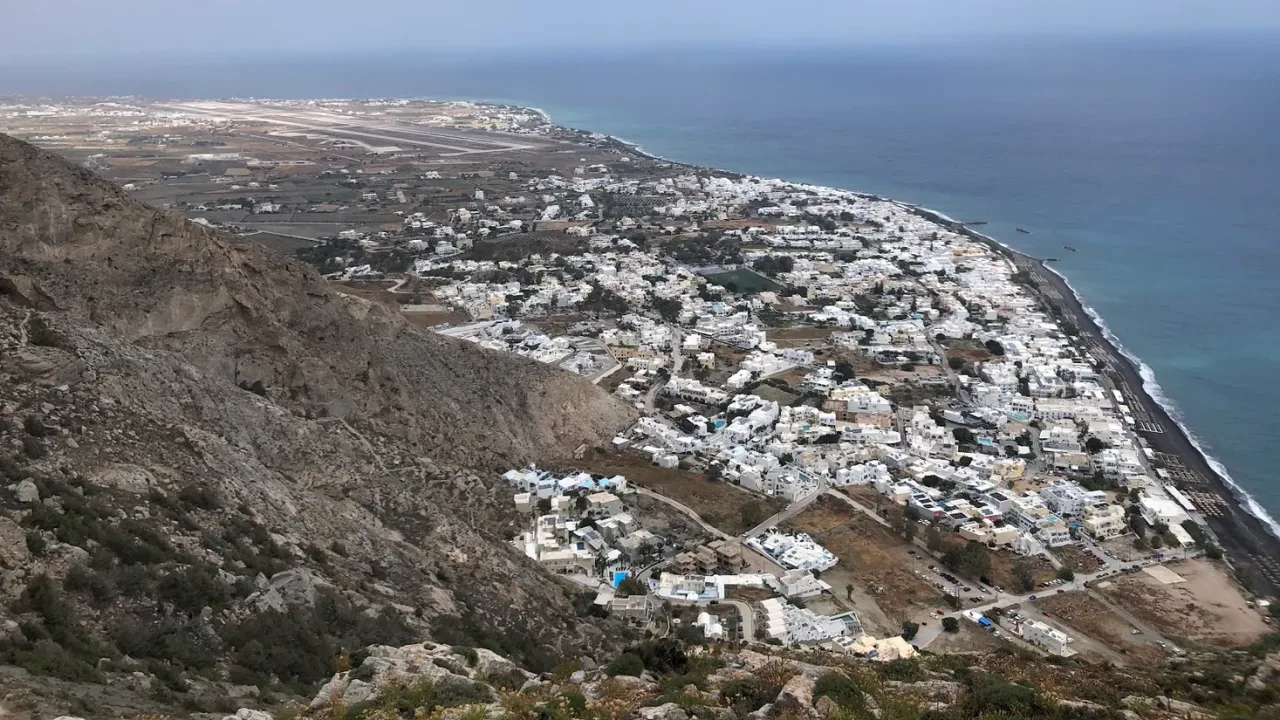
The Perissa path starts at the northern end of the village, where the beach meets the base of the rock, and climbs the western slope of Mesa Vouno on a distinct switchbacking trail. It is steeper and rougher than the paved road that serves the site from the Sellada saddle above Kamari, but it is also much shorter and it gives you the better views. You climb with Perissa, Perivolos and the whole sweep of the southeast coast opening up behind you. Expect roughly 350–360 metres of ascent to reach the ridge, where Ancient Thera sits about 370 metres above the sea.
Most walkers reach the site in 45 to 60 minutes, though the fit and early-rising can do it in around 40. The surface is loose volcanic and limestone rock with some scrambly, uneven sections, so this is a hike, not a stroll, trekking sandals or flip-flops are a genuinely bad idea here. If you would rather not climb at all, you can drive up the road from Kamari to a car park near the entrance, but you lose the whole point of the trail. For more on the site itself, see our Ancient Thera guide and the /landmarks/ancient-thera page.
How hard is it, really?
Honestly assessed, the Perissa ascent rates as hard, not technical, but genuinely demanding in Santorini's summer heat. The two things that catch people out are exposure and water. There is no shade anywhere on the west face and no water source or fountain on the trail; there is a small snack van near the site entrance at the top, but you cannot count on it, so carry your own. Combine full sun, loose footing and a 350-metre climb and you have a walk that punishes anyone who sets off at midday in the wrong shoes.
Done sensibly, though, it is well within reach of most reasonably active adults and older children. The trick is simply to respect the conditions: go early, go slow, and turn back if you are struggling in the heat rather than pushing on to the exposed ridge. It is a very different proposition from the flat, easy village below. See how the two sides of the island compare in our Perissa vs Kamari piece.
Which direction: Perissa or Kamari?
There are two ways up to Ancient Thera, and choosing well shapes the whole day. The Perissa path climbs the west face, steeper, rougher and less maintained, but shorter and with the better views opening behind you as you gain height. The Kamari side offers both a paved switchback road (which cars and the occasional shuttle use) and a walking trail up the east flank from the Sellada saddle; it is longer but gentler underfoot. Many walkers make it a one-way traverse, up the sharp Perissa path in the cool of the morning, across the ridge through the ruins, and down the gentler Kamari side, then catch the bus back round via Fira.
If you have a car, a common tactic is to drive to the car park near the site entrance above Kamari, tour the ruins, and only then walk a stretch of the ridge for the views before driving back, trading the workout for convenience. There's no wrong answer; it depends on how much climbing you want in the heat and whether you'd rather earn the view or drive to it. The two beach towns either side of the ridge are compared in Perissa vs Kamari if you're weighing where to base yourself.
| Route to Ancient Thera | Ascent time | Character | Best for |
|---|---|---|---|
| Perissa foot path (west face) | ~45–60 min | Steep, loose, unshaded, better views | Fit early risers who want the climb |
| Kamari foot path (east flank) | ~60 min | Longer but gentler underfoot | A steadier walk up from Kamari |
| Drive via Sellada / Kamari road | ~10–15 min by car | Paved switchbacks to a car park | Skipping the climb entirely |
Times are indicative and depend on pace and the heat, so allow a margin either way and start early whichever route you choose.
When to go and what to bring
Timing is everything on this trail. Early morning is the only sensible window in July and August: start at or soon after first light, when the west face is still in shadow and the air is cool, and you will be up at the ruins for the clear morning light along the ridge. Late afternoon is a distant second choice and doesn't work well anyway, because the archaeological site stops admitting visitors around 15:00 (last admission) and closes at 15:30, so factor in the 45–60 minute climb and be starting up well before then, or you would be walking to a locked gate. Our best time to visit Perissa guide has more on the island's shoulder-season months, which are far kinder for any hiking.
Pack for exposure, not for a beach day:
- Proper trainers or hiking shoes. The rock is loose and uneven.
- At least 1–1.5 litres of water per person. There is none on the trail.
- Sun hat, sunglasses and high-factor sunscreen, zero shade the whole way.
- A light layer if you start at dawn, plus a phone or small camera for the views.
- Cash for the site entrance and the snack van at the top.
Ancient Thera at the top
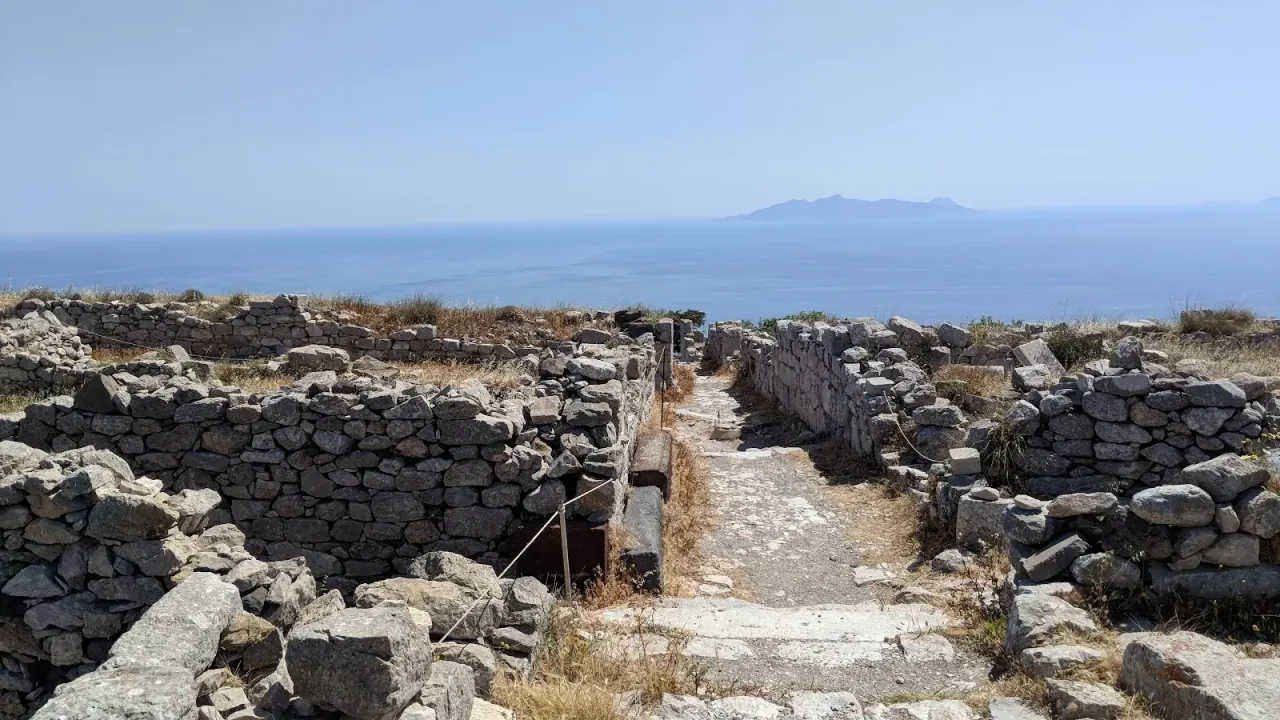
The reward for the climb is one of the great sights on the island: Ancient Thera, a whole Dorian-Hellenistic-Roman city strung along the crest of Mesa Vouno, with terraces, a processional street, house and temple foundations, cisterns and rock-cut inscriptions, and vertiginous views down to Perissa on one side and Kamari on the other. Entry is around €10 for adults (raised from €6 in the late-2025 revision; about half price reduced; a ~€15 three-day combined ticket also covers Akrotiri and the Museum of Prehistoric Thera), and state-site fees change periodically, so confirm the current rate on arrival.
The site is usually open daily except Wednesday, roughly 08:30–15:30 with last admission around 15:00 (3pm), but these hours are seasonal, so check the current times before you set out. You do not want to climb 45–60 minutes only to reach a closed gate. Plan on 1.5 to 2 hours exploring the ruins on top of the climb. Many walkers then continue down the eastern path to Kamari and take the bus back round via Fira, turning the hike into a one-way traverse of the whole ridge. Whichever way you go, treat the mountain with respect: see the wider trail network on the /landmarks/mesa-vouno page and the full list of village sights at /landmarks.
Frequently Asked Questions
How long does the Mesa Vouno hike from Perissa take?
Allow 45–60 minutes to climb from Perissa up to Ancient Thera, gaining around 350–360 metres. Faster hikers manage about 40 minutes. Add 1.5–2 hours to explore the ruins, and more if you continue down the far side to Kamari, which makes it a half-day outing in total.
Is the Mesa Vouno trail difficult?
Yes, it rates as hard, not technical climbing, but a steep 350-metre ascent on loose, rocky ground with no shade and no water on the trail. It is manageable for most active adults in proper trainers, provided you go early in the morning, carry plenty of water and pace yourself in the heat.
Do I need to pay to hike Mesa Vouno?
The hillside and footpaths themselves are free and open access. You only pay if you enter the Ancient Thera archaeological site at the top, which is around €10 for adults, or ~€15 for the three-day combined ticket that also covers Akrotiri and the Museum of Prehistoric Thera. Bring cash to be safe.
What should I wear for the Mesa Vouno hike?
Wear proper trainers or hiking shoes with grip. Never flip-flops or beach sandals on the loose rock. Bring a sun hat, sunglasses and sunscreen, since there is no shade, and carry 1–1.5 litres of water per person because none is available on the trail. Set out early to avoid the worst of the heat.