Bijgewerkt 2026·Te voet gecontroleerd·The tall rock rising directly behind Perissa
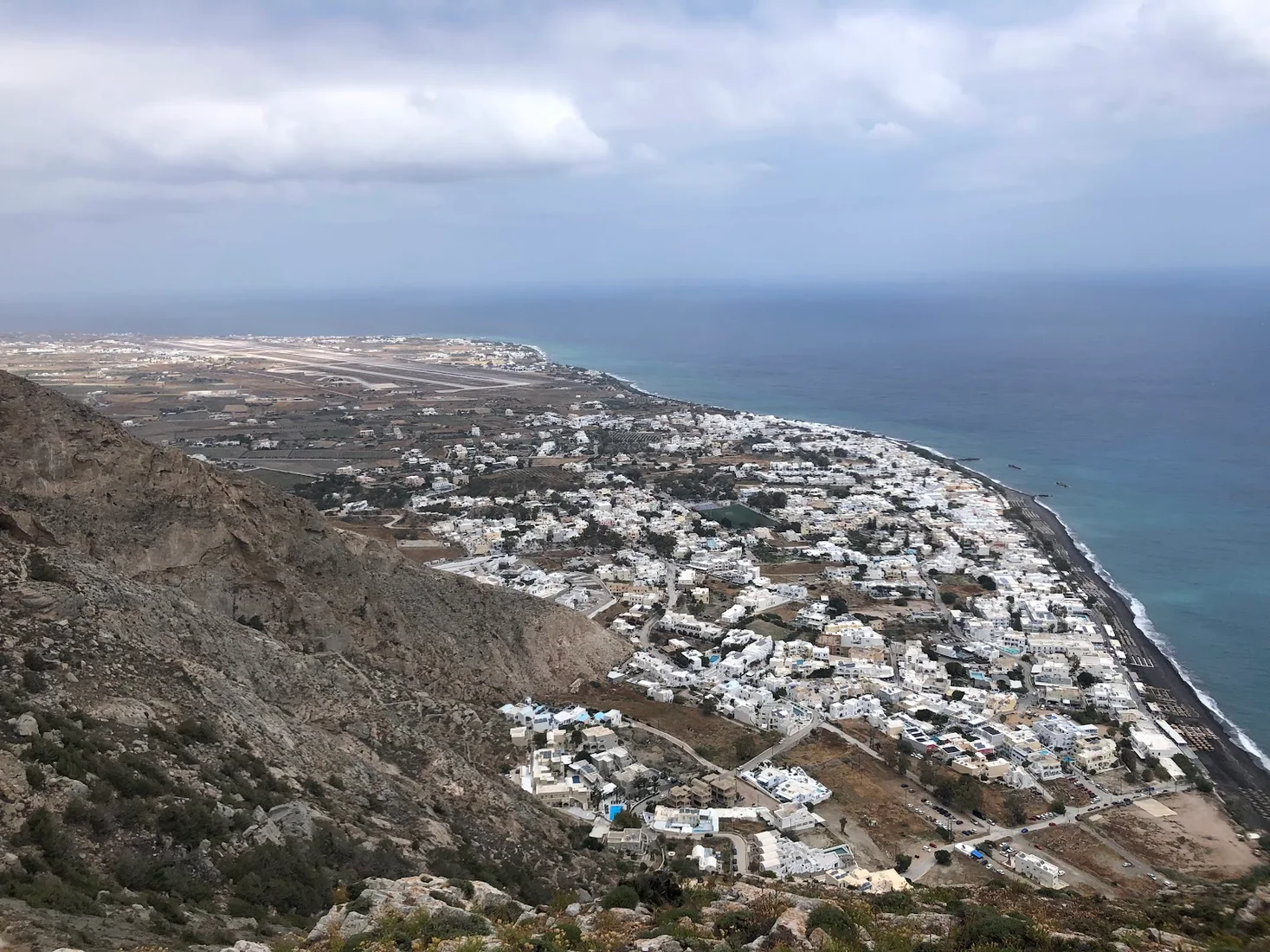
Mesa Vouno is the tall limestone headland — rising to about 370 metres — that climbs straight up behind Perissa and separates it from Kamari, carrying the ruins of Ancient Thera along its crest and offering some of the finest views on the island.
Mesa Vouno · Natural rock headland
Periode
Natural rock headland
Locatie
Immediately above the village
Toegang
Free (open hillside)
Openingstijden
Open access; hike in daylight only
Benodigde tijd
2–3 hours for the hike over to Kamari or up to Ancient Thera
Beoordeling
4.8★ · 10 beoordelingen
Openingstijden en prijzen voor het laatst gecontroleerd in 2026 — ze veranderen, dus bevestig ze op de dag zelf.
Geschiedenis
Hoe het is ontstaan
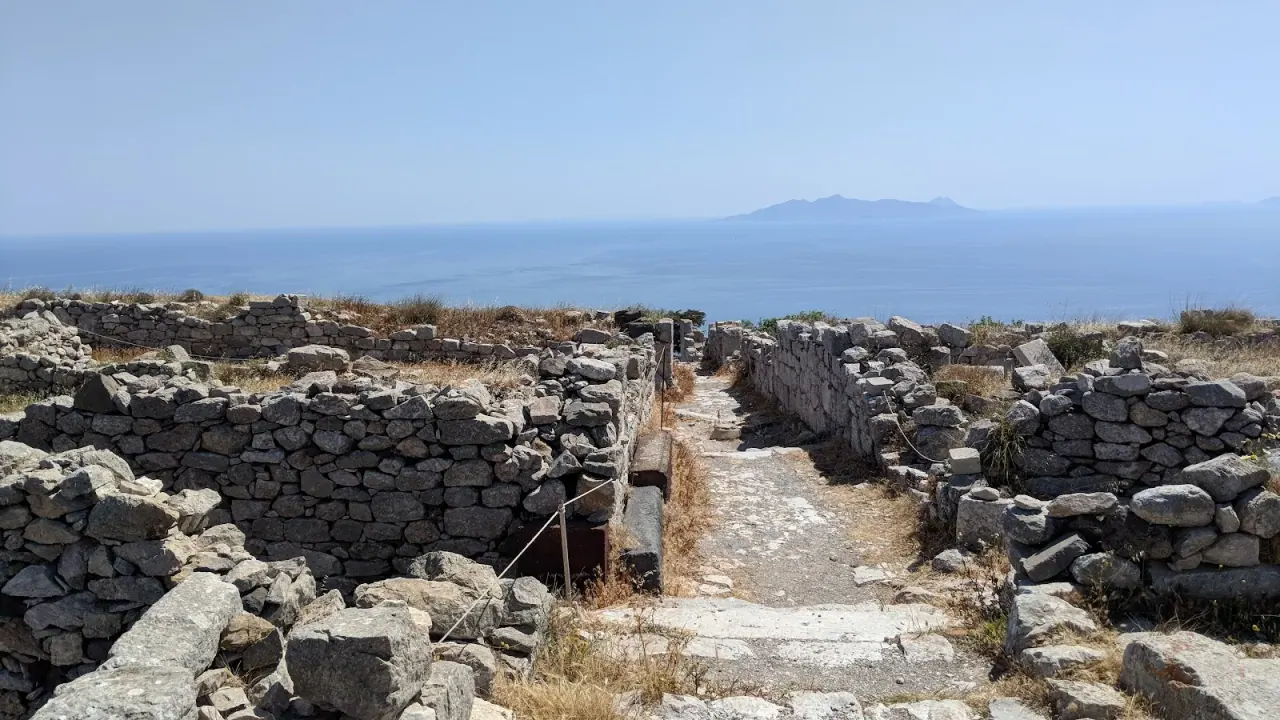
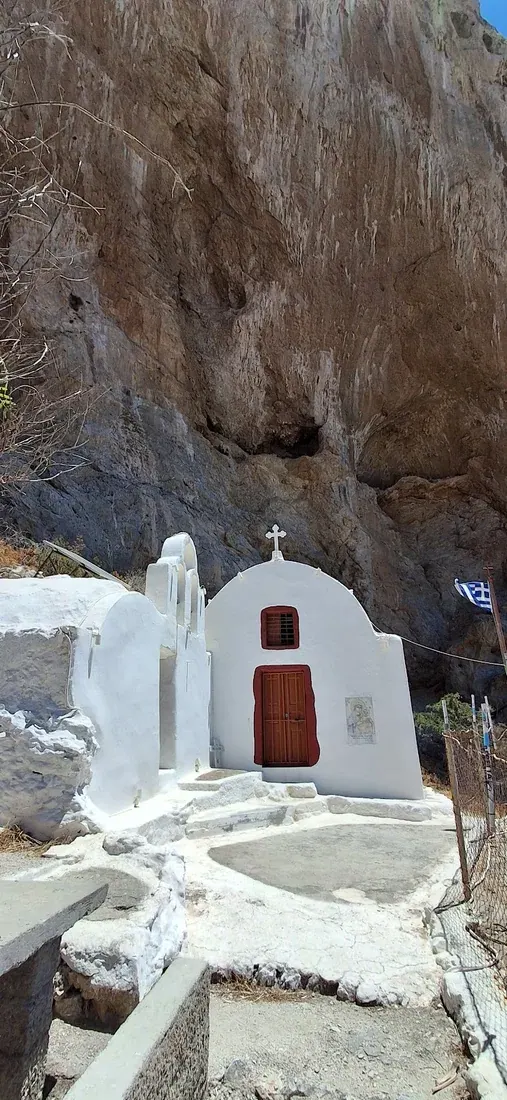
The rock's naturally defensible ridge was chosen for the city of Ancient Thera in antiquity, and its flanks hold rock chapels such as Panagia Katefiani. Today its paths link Perissa, Kamari and the archaeological site above.
Wat je zult zien
Tijdens een bezoek
The dramatic bare rock face above the black beach, the hiking paths to Ancient Thera and over to Kamari, the cliff chapels, and panoramic views over Perissa, Perivolos and the sea.
Hoe te bezoeken
Footpaths climb from both Perissa and Kamari to the Sellada saddle and Ancient Thera. The trails are steep, rocky and exposed, so wear proper shoes and set out early.
Beste tijd
Early morning or late afternoon to avoid the heat on the exposed rock
Galerij
Er komen
Locatie
Immediately above the village · The tall rock rising directly behind Perissa
Yes. Steep paths climb from Perissa and Kamari up to the Sellada saddle and the ruins of Ancient Thera, and you can walk right over the ridge between the two beaches. The trails are exposed, so go early with water and good shoes.
The crest of the ridge carries the ruins of Ancient Thera, the Greco-Roman city that once crowned the mountain — terraces, streets, temple foundations and a theatre strung high above both Perissa and Kamari, with the Aegean on either side. The climb is worth it as much for the panoramas as for the archaeology.