Orthodoxe kerk · Whitewashed church with blue domes
Church of the Holy Cross
Bijgewerkt 2026·Te voet gecontroleerd·At the entrance to Perissa, just back from the beach
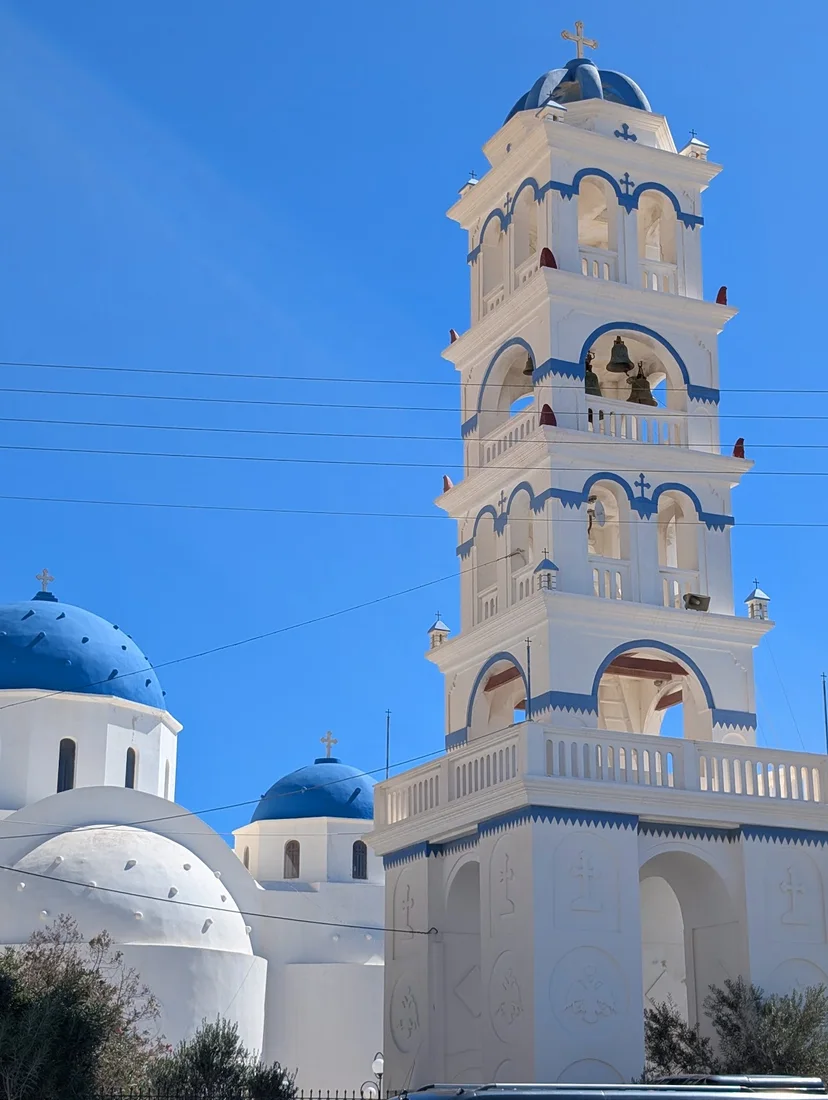
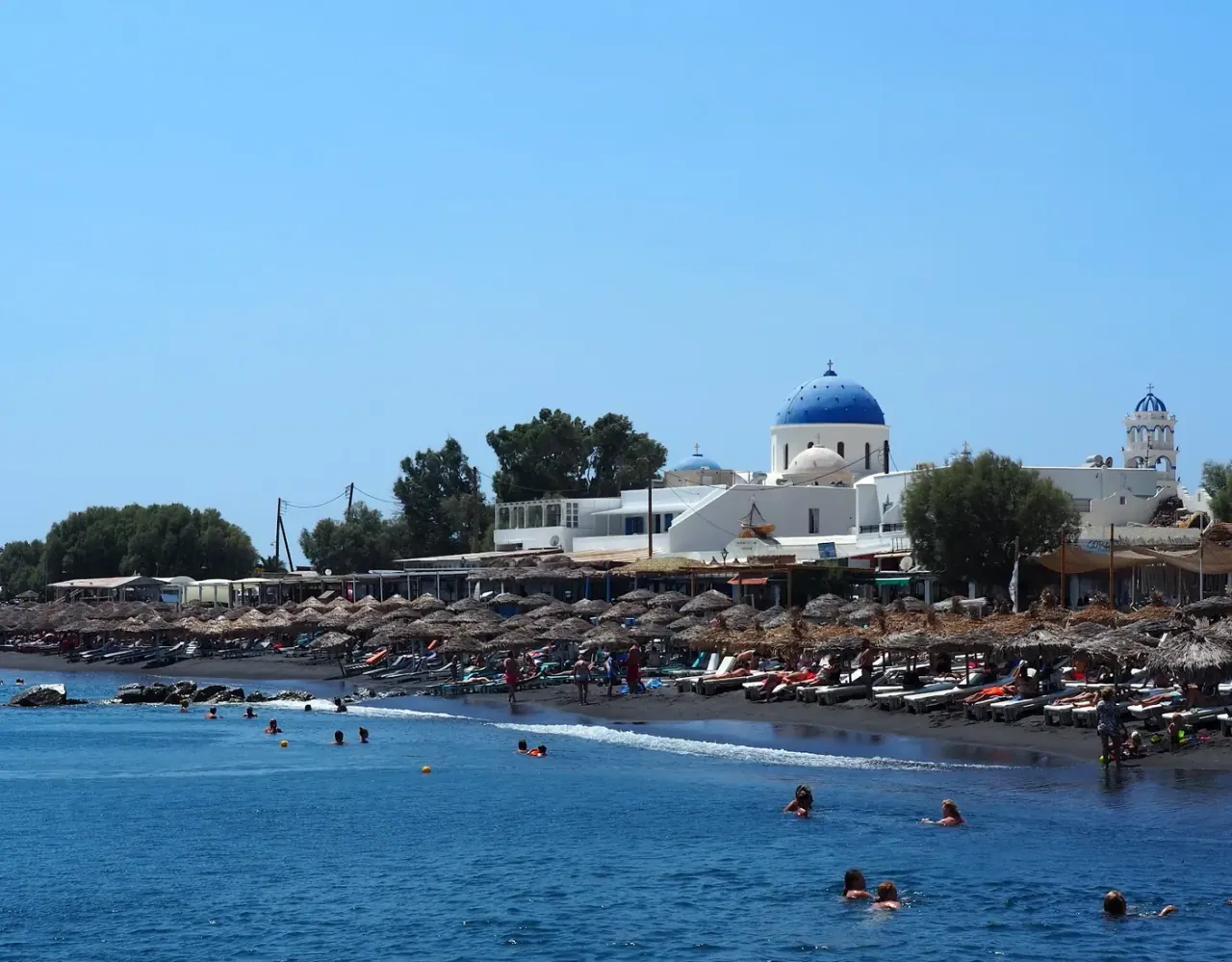
The Church of the Holy Cross is the largest church on Santorini — a big whitewashed, four-blue-domed church that marks the entrance to Perissa, with a tall arcaded bell tower that rises above the village.
Church of the Holy Cross · Whitewashed church with blue domes
Periode
Whitewashed church with blue domes
Locatie
In the village, a few minutes from the seafront
Toegang
Free
Openingstijden
Generally open around service times; hours vary
Benodigde tijd
15–20 minutes
Beoordeling
4.7★ · 134 beoordelingen
Openingstijden en prijzen voor het laatst gecontroleerd in 2026 — ze veranderen, dus bevestig ze op de dag zelf.
Geschiedenis
Hoe het is ontstaan
First built around 1835–1840 and rebuilt after the 1956 Amorgos earthquake, the church stands on a much older Christian site: the reconstruction uncovered the foundations of two early-Christian three-aisled basilicas beneath it. It remains the main church of the village, and its scale and blue domes make it a landmark visible from the beach and from the slopes of Mesa Vouno above.
Wat je zult zien
Tijdens een bezoek
The blue domes and the ornate multi-tiered bell tower, the whitewashed exterior, and the quiet interior when it is open for services.
Hoe te bezoeken
On the main road at the edge of Perissa, an easy flat walk from the beach. Please dress modestly and keep quiet if a service is under way.
Beste tijd
Morning light, or golden hour when the white walls warm up
Galerij
Er komen
Locatie
In the village, a few minutes from the seafront · At the entrance to Perissa, just back from the beach
Yes. It is the village's main church and can be visited around service times; dress modestly and be respectful, especially during services.
It's the largest church on Santorini — a big whitewashed, blue-domed landmark with a tall arcaded bell tower that marks the entrance to Perissa. It was rebuilt in the mid-20th century after the 1956 Amorgos earthquake, and during the works the remains of two early-Christian basilicas were uncovered beneath it, hinting at how long this spot has been a place of worship.